
Zero-Click Search Strategy for Startups
Learn how a zero-click search strategy works, where it creates visibility, and how startups can balance answer surfaces with deeper conversion paths.
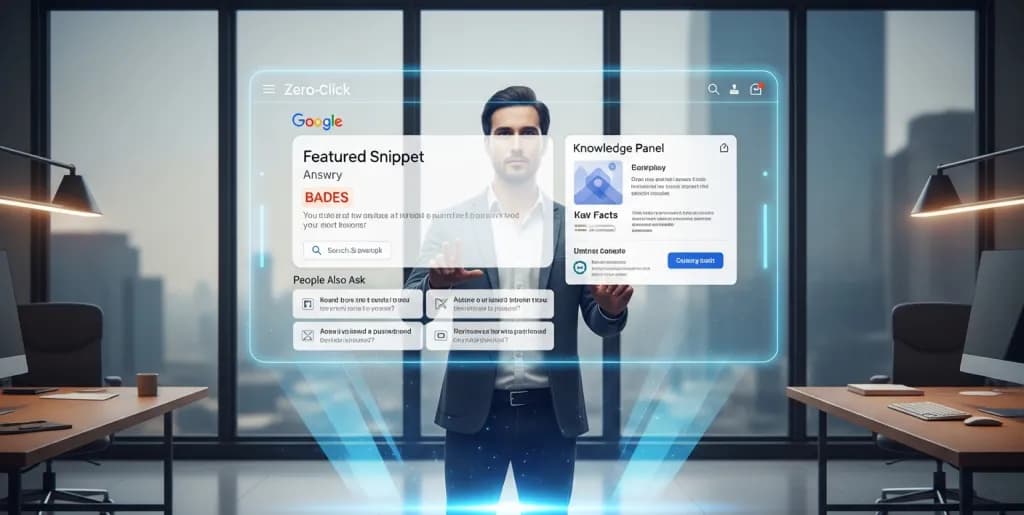
Zero-click search means the user gets enough of an answer directly on the search results page that they may never visit the underlying website. For startups, that can look like a traffic loss at first, but it is also a visibility and authority opportunity if the brand becomes the source behind the answer.
The right response is not to fight zero-click behavior. It is to decide which queries deserve direct-answer optimization and which ones should still push users toward deeper pages, product flows, or sign-up intent.
This guide explains where a zero-click search strategy helps, where it can backfire, and how startups can use featured snippets, PAA, and structured content without giving away every commercial opportunity.
The Seismic Shift: Why a Zero-Click Search Strategy is Your Startup's New North Star
A zero-click search strategy is no longer a niche tactic; it's a fundamental pillar of modern online visibility. What exactly does this mean? It signifies that a user's query is answered directly on the search engine results page (SERP), eliminating the need for them to click on any organic listing. Google, in its relentless pursuit of user satisfaction, has become an answer engine, not just a directory. This evolution profoundly impacts how startups must approach their digital presence.
Think about the "Old Way" of SEO: we obsessed over keywords, built backlinks, and chased the top organic spot, assuming a click was the inevitable next step. The goal was always to drive traffic to our site, where we could then convert visitors. This model, while still relevant for certain intents, is increasingly incomplete.
The "New Way" acknowledges that for a growing number of queries, the user's journey ends right on the SERP. We're talking about Featured Snippets, Knowledge Panels, Local Packs, and People Also Ask sections. These aren't just add-ons; they are prime real estate, offering unparalleled visibility and authority. For a startup, where brand recognition and trust are hard-won assets, appearing in these zero-click features is a direct route to establishing credibility. It means your brand is the definitive answer, the trusted source, right when a potential customer is looking for information. This isn't about bypassing your website; it's about becoming the primary information provider, building brand equity even before a click occurs.
Why does this matter so profoundly for startups? Startups often operate with limited resources, competing against established players with deep pockets. A well-executed strategy for zero-click search offers a distinct competitive advantage. It allows you to leapfrog competitors by directly answering user questions, positioning your brand as an expert. It's about efficiency: delivering value instantly, building trust, and capturing attention in a crowded digital space. This approach isn't just about getting seen; it's about being seen as the authoritative source, which can be invaluable for early-stage companies.
Deconstructing the Zero-Click Landscape: Where Opportunities Lie
Understanding the various forms of zero-click features is the first step toward harnessing their power. Each type presents unique opportunities for startups to gain visibility, establish authority, and directly engage with potential customers. Let's break down these critical components.
Featured Snippets: The Holy Grail of Instant Answers
Featured Snippets are arguably the most coveted zero-click feature. They appear at the very top of the SERP, often referred to as "position zero," directly answering a user's question. Winning a Featured Snippet means Google has deemed your content the best, most concise answer to a specific query. This isn't just about visibility; it's a massive endorsement of your expertise.
There are several types of Featured Snippets, each requiring a slightly different optimization approach:
- Paragraph Snippets: These provide a direct, concise answer in a paragraph format. They often respond to "what is," "who is," or "why is" questions. To optimize for these, structure your content with clear, direct answer sentences immediately following a question-based heading. Aim for around 40-60 words for the snippet itself.
- List Snippets: These appear as bulleted or numbered lists, perfect for "how to," "steps to," or "best ways to" queries. Ensure your content uses
<h2>,<h3>,<h4>tags for steps and clearly defined list items. Google often pulls these directly from ordered or unordered lists on your page. - Table Snippets: Ideal for comparative data, pricing, or specifications. If you have data that can be presented in rows and columns, structure it using HTML table tags. Google frequently extracts this information to display directly on the SERP.
- Video Snippets: For queries where a visual explanation is most helpful, Google might feature a YouTube video with a specific timestamp. If your startup produces instructional videos, ensure they are well-titled, include detailed descriptions, and have clear chapter markers.
Optimization Tactics: The core strategy for Featured Snippets is to anticipate user questions and provide the absolute best, most direct answer. Use question-based headings (<h2> or <h3>). Start your answer immediately after the question. Employ clear, simple language. Structure your content logically with headings, subheadings, and lists.
Consider a real-world observation: A small SaaS startup, "TaskFlow," specializing in project management software for remote teams, wanted to increase its brand visibility. They noticed a common query: "how to improve remote team productivity." Instead of just writing a general blog post, they crafted an article specifically designed to answer this question directly. They created a section titled "5 Actionable Steps to Boost Remote Team Productivity," using an H2 tag for the question and then a numbered list of five concise, practical tips. Within weeks, their article secured a Featured Snippet for that exact query. The result wasn't just a click-through rate boost; it was a significant increase in brand mentions and direct sign-ups to their free trial, as users saw TaskFlow as the authoritative source for remote productivity solutions. This direct answer strategy paid off immensely, establishing their expertise right at the top of the search results.
Knowledge Panels: Building Brand Presence and Authority
Knowledge Panels are information boxes that appear on the right-hand side (on desktop) or at the top (on mobile) of the Google SERP. They provide a summary of information about an entity – a person, place, organization, or topic. For startups, a well-optimized Knowledge Panel is a powerful tool for brand building and direct information dissemination.
These panels are often generated automatically by Google, drawing information from various sources like Wikipedia, Crunchbase, Google My Business, and other authoritative websites. Your goal is to influence and verify the information Google displays.
Key Actions:
- Claim and Optimize Google My Business (GMB): If your startup has a physical location or serves a specific geographic area, GMB is non-negotiable. Fill out every section meticulously: business name, address, phone number, hours, services, photos, and a detailed description. Actively solicit and respond to customer reviews.
- Build a Strong Online Presence: Ensure your startup has consistent, accurate information across all major online directories and social media profiles.
- Create Structured Data: Use Schema Markup (more on this later) to explicitly tell Google about your organization, its official website, social profiles, and key personnel.
- Wikipedia and Crunchbase: If your startup reaches a certain level of notability, a Wikipedia page can be a strong signal to Google. Similarly, maintaining an up-to-date Crunchbase profile is crucial for tech startups.
A well-managed Knowledge Panel means users get accurate, verified information about your startup instantly, fostering trust and legitimacy without needing to navigate your website.
Local Packs: Hyper-Local Visibility Goldmines
For startups with a local presence – a physical store, a service area business, or even just targeting customers in a specific city – the Local Pack is a critical zero-click feature. This box displays a map and a list of 3-4 local businesses relevant to a location-based query (e.g., "coffee shops near me," "IT support San Francisco").
Optimization for Local Packs:
- Google My Business Dominance: This is the single most important factor. Ensure your GMB profile is 100% complete, verified, and regularly updated.
- Local Citations: Ensure your business name, address, and phone number (NAP) are consistent across all online directories (Yelp, Yellow Pages, industry-specific sites). Inconsistencies confuse search engines.
- Reviews: Encourage customers to leave reviews on your GMB profile and other relevant platforms. Respond to all reviews, positive or negative, professionally and promptly. This builds trust and signals engagement to Google.
- Location-Specific Content: Create content on your website that targets local keywords and addresses local needs. For example, a blog post titled "Best Co-working Spaces for Startups in Austin" if you're an Austin-based service provider.
Consider "UrbanCycle Repair," a startup offering mobile bicycle repair services in a specific metropolitan area. They meticulously optimized their GMB profile, including detailed service descriptions, service areas, and high-quality photos of their technicians at work. They actively encouraged customers to leave reviews, often sending a follow-up email after a repair with a direct link. Within months, UrbanCycle Repair began appearing consistently in the Local Pack for queries like "bike repair [city name]" and "mobile bike mechanic." This direct visibility led to a significant increase in direct phone calls and booking inquiries, many of which converted into paying customers without ever visiting their website first. The Local Pack became their primary lead generation channel.
People Also Ask (PAA): Anticipating User Intent
The "People Also Ask" (PAA) box is a dynamic section on the SERP that displays a list of related questions users frequently ask. Clicking on a question expands to reveal a short answer, often pulled from a website, and sometimes even more related PAA questions.
Leveraging PAA for Zero-Click:
- Research PAA Questions: When doing keyword research, pay close attention to the PAA section for your target queries. These are explicit signals of what your audience wants to know.
- Answer Comprehensively: Create dedicated sections or entire articles that directly answer these PAA questions. Structure your content so the answer to each question is clear, concise, and immediately accessible within the text.
- Use Q&A Format: Employing a direct question-and-answer format (e.g., "What is [topic]? [Answer].") often helps Google identify your content as a suitable PAA source.
- Expand on Answers: While the initial PAA answer is short, ensure your page provides more in-depth information if a user decides to click through.
PAA is a goldmine for understanding user intent and expanding your content strategy. By answering these questions proactively, you position your startup as a helpful, knowledgeable resource.
Rich Results & Schema Markup: Structuring for Understanding
Rich Results are visually enhanced search results that go beyond the standard blue link. They include elements like star ratings, images, prices, and other specific details, making your listing stand out. While not always strictly "zero-click" (they often encourage a click), they significantly increase visibility and provide more information upfront, influencing user decisions.
Schema Markup is the key to Rich Results. Schema.org is a collaborative vocabulary that you can add to your website's HTML to help search engines understand the meaning of your content. It's like giving Google a direct, structured explanation of what's on your page.
Common Rich Results for Startups:
- Review Snippets: Display star ratings and review counts for products, services, or businesses. Crucial for e-commerce or service-based startups.
- Product Snippets: Show product images, prices, availability, and ratings directly on the SERP. Essential for online stores.
- Event Snippets: Display dates, times, and locations for upcoming events. Useful for startups hosting webinars, workshops, or conferences.
- FAQ Snippets: If you have a FAQ section on your page, you can mark it up with FAQPage schema, allowing Google to display questions and answers directly on the SERP. This is a powerful zero-click feature.
- How-to Snippets: For step-by-step guides, HowTo schema can display the steps directly.
Implementing Schema Effectively:
- Identify Relevant Schema Types: Use Google's Structured Data Markup Helper or Schema.org to find the most appropriate schema types for your content (e.g.,
Organization,Product,Service,Article,FAQPage). - Add to Your HTML: Implement the schema markup directly into your page's HTML. JSON-LD is the recommended format.
- Test Your Markup: Use Google's Rich Results Test tool to ensure your schema is correctly implemented and eligible for rich results.
Schema markup is the language you use to explicitly tell Google about your content, increasing the chances of your startup appearing in visually appealing and informative rich results. It's not just about getting found; it's about being understood.
Image & Video Carousels: Visual Dominance
For many queries, especially those related to products, tutorials, or visual concepts, Google displays carousels of images or videos. Optimizing for these can provide significant zero-click visibility.
Strategies for Visual Content:
- High-Quality Images: Use clear, high-resolution images that are relevant to your content.
- Descriptive Alt Text: Provide detailed, keyword-rich alt text for all images. This helps Google understand the image's content.
- Image File Names: Use descriptive file names (e.g.,
zero-click-strategy-infographic.jpginstead ofIMG001.jpg). - Video Optimization: For videos, ensure strong titles, detailed descriptions, relevant tags, and clear thumbnails. Consider adding a transcript to your video pages.
- Schema for Media: Use
ImageObjectandVideoObjectschema to provide structured information about your visual assets.
Visual content offers another powerful avenue for your startup to capture attention and convey information directly on the SERP.
Crafting Your Content for Zero-Click Dominance
Content is the bedrock of any successful zero-click search strategy. It’s not enough to simply produce content; you must craft it with a specific purpose: to answer user queries directly and comprehensively, right on the search results page. This requires a shift in mindset from "write for clicks" to "write for answers."
Answer-First Content: Directly Addressing User Queries
The fundamental principle of zero-click content is to be an answer engine. Every piece of content, or at least key sections within it, should aim to directly and succinctly answer a specific question a user might ask. This means anticipating their needs and providing the solution upfront.
Practical Steps:
- Identify the Core Question: Before writing, determine the primary question your content aims to answer.
- Lead with the Answer: Start your content, or a specific section, with a clear, concise answer to that question. Don't bury the lead.
- Elaborate Afterward: Once the direct answer is provided, you can then elaborate, provide context, examples, and supporting details. This caters to both zero-click users (who get their answer instantly) and those who click through for more depth.
This approach ensures that even if a user doesn't click, they still receive value from your brand, building recognition and trust.
Clarity and Conciseness: Get to the Point Quickly
In the age of information overload, brevity is a virtue. For zero-click optimization, conciseness is paramount. Google often pulls short, digestible snippets for its features.
- Avoid Fluff: Eliminate unnecessary words, jargon, and lengthy introductions. Every sentence should add value.
- Simple Language: Use plain, accessible language. Imagine explaining a concept to a smart 10-year-old.
- Short Sentences and Paragraphs: Break down complex ideas into easily digestible chunks. This also aligns perfectly with our paragraph and sentence length goals.
This directness not only helps Google understand your content but also respects the user's time, delivering immediate value.
Structured Content: Headings, Bullet Points, Numbered Lists
Google loves structured content because it's easier to parse and understand. Well-organized content is more likely to be featured in snippets and rich results.
- Use Headings (H1, H2, H3): Employ a logical hierarchy of headings to break down your content. Your H1 should be your main topic, H2s for major sections, and H3s for sub-points. Use question-based headings where appropriate to signal answers.
- Bullet Points and Numbered Lists: For "how-to" guides, lists of features, or comparative data, use bullet points or numbered lists. These are prime candidates for list-based Featured Snippets.
- Bold Key Phrases: Bold important terms, definitions, and takeaways. This draws the eye and helps Google identify crucial information.
Structured content improves readability for humans and parseability for search engines, a win-win for your startup.
The "Inverted Pyramid" for Search Answers
Journalists use the inverted pyramid structure to present the most important information first, followed by supporting details. This is an excellent model for zero-click content.
- Apex (Top): The core answer to the user's query. This should be a concise, direct statement.
- Middle: Key supporting details, explanations, and context.
- Base (Bottom): Background information, related concepts, and further reading.
This ensures that even if Google only pulls the "apex" for a snippet, the user still gets the essential information. If they click through, the deeper context is readily available.
Long-Form Content for Comprehensive Answers, Short-Form for Direct Snippets
This might seem contradictory, but it's not. To establish authority and cover a topic comprehensively, long-form content (1500+ words) is often necessary. However, within that long-form content, you must strategically embed short, direct answers that are ripe for snippets.
- Comprehensive Coverage: Long-form content allows you to delve deep into a topic, answer multiple related questions (ideal for PAA), and establish your expertise.
- Snippet-Ready Sections: Within your long-form piece, create distinct sections with question-based headings and immediate, concise answers (40-60 words) that Google can easily extract.
This dual approach ensures you cater to both the immediate answer need and the desire for in-depth understanding, maximizing your zero-click potential while also providing valuable on-site content.
This is where an AI-powered marketing platform VibeMarketing can become a significant asset for busy founders. It's designed to automate the heavy lifting of content creation, generating SEO-optimized articles in your unique brand voice. Imagine being able to consistently produce well-structured, answer-first content that targets key zero-click opportunities, without spending hours on research and writing. VibeMarketing helps you scale your content efforts, ensuring you're always providing valuable answers to your audience.
Technical Foundations: Ensuring Google Can "Read" Your Answers
Even the most brilliant content won't get noticed if Google can't properly access, understand, and index it. Technical SEO is the silent engine behind your zero-click search strategy, ensuring your answers are not just well-written, but also perfectly presented to the search engines. For startups, getting these foundations right from day one saves immense headaches down the line.
Site Speed and Mobile-Friendliness: Essential for All Search
These aren't just ranking factors; they're fundamental user experience requirements. Google prioritizes fast, mobile-friendly websites.
- Site Speed: Users expect pages to load almost instantly. Slow-loading pages lead to high bounce rates and a poor user experience, which Google notes. Optimize images, leverage browser caching, minimize CSS and JavaScript, and use a reliable hosting provider.
- Mobile-Friendliness: The majority of searches now occur on mobile devices. Your website must be responsive, adapting seamlessly to different screen sizes. Google's mobile-first indexing means it primarily uses the mobile version of your content for ranking.
These two factors are non-negotiable. If your site is slow or not mobile-friendly, your chances of appearing in any zero-click feature diminish significantly.
Core Web Vitals: The Performance Benchmark
Core Web Vitals are a set of specific, quantifiable metrics that Google uses to assess user experience. They measure loading performance, interactivity, and visual stability.
- Largest Contentful Paint (LCP): Measures loading performance. It's the time it takes for the largest content element on the page to become visible. Aim for under 2.5 seconds.
- First Input Delay (FID): Measures interactivity. It's the time from when a user first interacts with your page (e.g., clicks a button) to when the browser is actually able to respond to that interaction. Aim for under 100 milliseconds.
- Cumulative Layout Shift (CLS): Measures visual stability. It quantifies unexpected layout shifts of visual page content. Aim for a CLS score of less than 0.1.
Monitoring and improving your Core Web Vitals is crucial. Google Search Console provides a dedicated report for these metrics, offering actionable insights. A high-performing site is a site Google is more likely to feature.
Structured Data Implementation: The Language of Search Engines
We touched on this earlier, but it bears repeating: structured data is how you explicitly communicate with search engines about the context and meaning of your content. It's the technical backbone for rich results and many zero-click features.
- Use JSON-LD: This is the recommended format for implementing structured data. It's easy to add to the
<head>or<body>of your HTML. - Be Specific: Use the most specific schema types available (e.g.,
Productinstead ofThing). - Validate Your Markup: Always use Google's Rich Results Test tool and the Schema.org validator to check for errors. Incorrect schema can be worse than no schema.
Properly implemented structured data is like giving Google a cheat sheet for your website, dramatically increasing its chances of understanding and featuring your content in rich, informative ways.
Crawlability and Indexability: Making Sure Your Content is Found
Before Google can even consider your content for zero-click features, it needs to be able to crawl (discover) and index (store and understand) it.
- XML Sitemaps: Submit an XML sitemap to Google Search Console. This tells Google about all the important pages on your site.
- Robots.txt: Use your robots.txt file to guide crawlers, ensuring they access the pages you want them to and avoid those you don't (e.g., admin pages).
- Internal Linking: A robust internal linking structure helps Google discover new content and understand the hierarchy of your site. It also passes authority between pages.
- Canonical Tags: Use canonical tags to prevent duplicate content issues, telling Google which version of a page is the preferred one.
Regularly check your "Coverage" report in Google Search Console to identify and fix any crawl errors or indexing issues. If Google can't find or understand your content, it can't feature it.
Accessibility Considerations
Accessibility isn't just about compliance; it's about good user experience for everyone, which Google values. An accessible website is often a well-structured, well-coded website, making it easier for search engines to process.
- Semantic HTML: Use HTML elements for their intended purpose (e.g.,
<nav>for navigation,<button>for buttons). - Alt Text for Images: Crucial for visually impaired users and for search engines to understand image content.
- Keyboard Navigation: Ensure your site can be fully navigated using only a keyboard.
By focusing on these technical foundations, your startup builds a robust, search-engine-friendly platform that is primed for zero-click visibility. This is an area where VibeMarketing shines, offering daily technical audits and Google Search Console performance tracking. It's like having an AI-powered technical SEO expert constantly monitoring your site, turning complex site and search signals into prioritized tasks and recommended actions. This automation frees up busy founders to focus on their core business, knowing their technical SEO is in capable hands.
Strategic Execution: Implementing Your Zero-Click Plan
Building a zero-click search strategy isn't a one-time task; it's an ongoing process of research, creation, optimization, and iteration. For startups, a systematic approach is key to maximizing impact with limited resources.
Keyword Research for Zero-Click: Beyond Volume
Traditional keyword research often focuses on high-volume terms. For zero-click, the focus shifts to understanding user intent and identifying queries that are likely to trigger rich results and snippets.
- Focus on Questions: Queries starting with "what," "how," "why," "when," "where," and "who" are prime candidates for Featured Snippets and PAA. Use tools like AnswerThePublic, AlsoAsked, or even just Google's "People Also Ask" section to uncover these.
- Identify Comparison and Definition Queries: Users often search for definitions ("what is SaaS?") or comparisons ("CRM software vs. project management tools"). These are excellent for table or paragraph snippets.
- Look for "Best Of" and "Review" Terms: For product or service-based startups, queries like "best [product category] for startups" or "[your product] reviews" can trigger rich results with star ratings.
- Analyze SERP Features: When you search for a keyword, pay close attention to the SERP. Does it already have a Featured Snippet? A PAA section? A Local Pack? This tells you what Google deems important for that query. If a snippet exists, analyze its format and content to understand what Google prefers.
- Long-Tail Keywords: These are longer, more specific phrases that often reveal clearer user intent and have less competition, making them easier to win snippets for.
The goal isn't just to find keywords, but to find answerable keywords that Google is actively seeking to answer directly on the SERP.
Content Audit & Optimization: Repurposing for Impact
You might already have content on your website that can be optimized for zero-click features. A content audit helps you identify these opportunities.
- Identify Existing Snippet Wins: Use Google Search Console to see if any of your pages are already appearing in Featured Snippets. If so, analyze why and replicate that success.
- Pinpoint "Near Misses": Look for pages that rank on page one or two for relevant queries but aren't yet winning snippets. These are prime candidates for optimization.
- Repurpose and Restructure: Take existing content and reformat it. Add question-based headings, create bulleted or numbered lists, and ensure direct answers are prominent. For example, if you have a long article on "startup funding options," create a dedicated section with a heading "What are the main types of startup funding?" followed by a concise, bulleted answer.
- Fill Content Gaps: Based on your zero-click keyword research, identify questions your existing content doesn't answer and create new, targeted pieces.
This iterative process ensures your content is always working harder for your startup, maximizing its potential for direct SERP visibility.
Building Authority & Trust: The E-E-A-T Imperative
Google's emphasis on E-E-A-T (Experience, Expertise, Authoritativeness, Trustworthiness) is more critical than ever, especially for zero-click features. Google wants to provide the most reliable answers, and that means sourcing them from credible experts.
- Demonstrate Expertise: Ensure your content is written by or attributed to individuals with genuine expertise in the field. Include author bios, credentials, and links to their other work.
- Show Experience: For certain topics, demonstrating first-hand experience is crucial. Share case studies, real-world examples, and practical advice.
- Build Authoritativeness: Earn backlinks from reputable websites. Get mentions from industry leaders. Contribute to industry publications. These external signals tell Google that your startup is a respected voice.
- Foster Trustworthiness: Ensure your website is secure (HTTPS), transparent about its operations, and provides accurate, verifiable information. Have clear contact information, privacy policies, and terms of service.
For a startup, building E-E-A-T is a long-term play, but it's fundamental to winning and holding zero-click positions. Google isn't just looking for answers; it's looking for trusted answers.
Monitoring and Iteration: The Continuous Cycle of Improvement
A zero-click strategy is not set-it-and-forget-it. Google's algorithm is constantly evolving, and your competitors are also vying for these coveted spots. Continuous monitoring and iteration are essential.
- Track Snippet Wins: Regularly monitor which of your pages are appearing in Featured Snippets, PAA, and other rich results. Google Search Console is your primary tool for this, specifically the "Performance" report, where you can filter by "Search appearance" to see rich results.
- Analyze Performance: For pages winning snippets, analyze their performance. Are they driving direct value (e.g., sign-ups, calls) even without clicks?
- Identify Losses: If you lose a snippet, investigate why. Did a competitor publish better content? Did Google's algorithm change?
- A/B Test Snippet Content: For critical queries, consider A/B testing different versions of your snippet-ready content to see which performs better. This might involve tweaking the phrasing of your direct answer or the structure of a list.
- Stay Updated: Keep an eye on industry news and Google's official announcements regarding algorithm updates and new SERP features.
This is another area where an AI-powered platform like VibeMarketing proves invaluable. It integrates Google Search Console performance tracking directly into its dashboard, providing weekly insights and turning site and search signals into prioritized tasks and recommended actions. This means your startup gets intelligent, actionable guidance on what to optimize next, ensuring your zero-click strategy remains agile and effective without requiring constant manual analysis.
Overcoming Zero-Click Challenges and Common Pitfalls
While the benefits of a zero-click search strategy are undeniable, startups must also be aware of the challenges and common pitfalls. Navigating these effectively is crucial for sustained success.
The "No-Click" Dilemma: Balancing Visibility with Traffic
The most obvious challenge with zero-click features is the inherent paradox: you gain immense visibility, but often at the cost of direct website traffic. If a user gets their answer directly on the SERP, they have no reason to click through.
How to Address This:
- Strategic Intent: Prioritize zero-click optimization for queries where brand awareness, authority, or direct answers are more valuable than immediate traffic. For instance, answering "what is [your product category]" builds brand recognition, even if it doesn't lead to an immediate click.
- Lead with Value, Entice with More: Ensure your snippet-ready content provides the direct answer, but also hints at deeper insights, unique perspectives, or additional resources available on your site. This encourages clicks for users who want to learn more.
- Direct Value Propositions: For queries related to your product or service, ensure your snippet subtly communicates a unique selling proposition or a clear call to action (e.g., "Learn more about how [Your Product] solves X").
- Focus on Conversion-Oriented Queries: While informational queries are great for snippets, also target queries where a user is closer to a purchase decision, even if they're zero-click. For example, a comparison snippet for "best [product] for small businesses" can still lead to a direct conversion if your product is featured prominently and compellingly.
The goal isn't to eliminate clicks entirely, but to strategically leverage zero-click opportunities for maximum brand and business impact.
Content Decay: Keeping Answers Fresh and Accurate
The digital world moves fast. Information becomes outdated, statistics change, and best practices evolve. A snippet that was accurate a year ago might be misleading today. Google prioritizes fresh, accurate information.
- Regular Content Audits: Schedule periodic reviews of your zero-click optimized content.
- Update Statistics and Data: Replace old figures with current ones.
- Refine Best Practices: Update "how-to" guides with the latest methods.
- Monitor Competitors: See if competitors are publishing newer, more comprehensive answers.
- Date Your Content: While not always necessary, explicitly dating or updating your content can signal freshness to both users and search engines.
Treat your zero-click content as living documents that require ongoing maintenance to retain their authority and accuracy.
Algorithm Updates: Staying Agile
Google's algorithm is constantly being tweaked, with major updates rolled out several times a year. What works today might need adjustment tomorrow.
- Stay Informed: Follow reputable SEO news sources and Google's official channels.
- Observe Your Performance: Pay close attention to your Google Search Console data for any sudden drops or spikes in impressions or snippet wins.
- Adapt Quickly: Be prepared to analyze the impact of updates and adjust your strategy accordingly. This might mean refining your content, improving technical aspects, or re-evaluating keyword targets.
Agility is key. Don't get complacent with your zero-click wins; be ready to adapt.
Resource Constraints for Startups: Prioritization is Key
Startups often operate with lean teams and limited budgets. Implementing a comprehensive zero-click strategy can seem daunting.
- Prioritize High-Impact Opportunities: Don't try to win every snippet. Focus on queries that are most relevant to your target audience, have high search volume, or directly relate to your product/service.
- Leverage Automation: As mentioned, tools like VibeMarketing can automate many tasks, from technical audits to content generation, freeing up your team's time.
- Focus on Foundational Elements First: Ensure your site is technically sound (speed, mobile, schema) before diving deep into advanced content tactics.
- Repurpose Existing Content: Don't always create new content from scratch. Optimize and repurpose what you already have.
Smart prioritization ensures your limited resources yield the maximum return on investment.
Avoiding Keyword Stuffing and Unnatural Phrasing
In the pursuit of snippets, there's a temptation to cram keywords or phrase answers unnaturally. This is a critical pitfall to avoid. Google's algorithms are sophisticated; they prioritize natural language and user experience.
- Write for Humans First: Always ensure your content reads naturally and provides genuine value to the user.
- Use Synonyms and Related Terms: Instead of repeating the exact keyword, use variations and semantically related phrases.
- Focus on Clarity, Not Density: Your primary goal is to provide a clear, concise answer, not to hit a keyword density target.
Authenticity and natural language are paramount. Trying to game the system with artificial phrasing will ultimately backfire.
Integrating Zero-Click into Your Broader Startup Marketing
A zero-click search strategy should never exist in a vacuum. It's a powerful component that, when integrated thoughtfully, amplifies your startup's overall marketing efforts, creating a synergistic effect that drives sustained growth.
Synergy with Social Media: Repurposing Snippet Content
The concise, answer-first content you create for zero-click features is perfectly suited for social media.
- Share Snippet Wins: Announce when your startup wins a Featured Snippet or appears in a PAA box. This reinforces your authority.
- Repurpose Answers: Take your direct answers to common questions and turn them into social media posts, infographics, or short videos. For example, a list-based snippet on "5 tips for remote productivity" can become a carousel post on Instagram or a quick thread on X (formerly Twitter).
- Drive Engagement: Use social media to ask questions that you know are common zero-click queries, then direct users to your content for the answer (or provide it directly).
This cross-pollination extends the reach of your valuable content and reinforces your brand's expertise across multiple platforms. VibeMarketing, with its social post generation feature, can help automate this repurposing, ensuring your zero-click content gets maximum exposure.
Brand Building Beyond Direct Clicks
Zero-click visibility is a potent brand-building tool. When your startup consistently appears as the direct answer provider, it cultivates an image of authority, reliability, and expertise.
- Top-of-Mind Awareness: Being the first answer a user sees creates top-of-mind awareness, even if they don't click immediately.
- Trust and Credibility: Google's endorsement (by featuring your content) lends significant credibility to your brand. Users inherently trust answers provided directly by Google.
- Thought Leadership: Consistently answering complex questions positions your startup as a thought leader in your industry.
This long-term brand equity is invaluable for startups, helping you stand out in a crowded market.
Thought Leadership and Industry Positioning
By strategically targeting zero-click opportunities, your startup can actively shape its position within the industry.
- Define Your Niche: Focus on answering questions within your specific niche, establishing your startup as the go-to expert for those particular topics.
- Educate Your Audience: Use zero-click content to educate potential customers about problems your product solves, industry trends, or innovative solutions.
- Influence Perceptions: By providing clear, unbiased answers, you can subtly influence how your target audience perceives various solutions, including your own.
This proactive approach to content helps you not just react to search demand, but also to lead the conversation.
The Long-Term Value of Being the "Answer"
The cumulative effect of a strong zero-click strategy is profound. Over time, being consistently recognized as the "answer" to your audience's questions leads to:
- Increased Brand Recall: Users remember the brands that consistently help them.
- Higher Direct Traffic: As trust and awareness grow, users are more likely to navigate directly to your site or search for your brand by name.
- Enhanced Conversion Rates: Users who arrive at your site already having received value from your brand are often more qualified and receptive to your offerings.
- Stronger SEO Foundation: The authority gained from zero-click features positively impacts your overall SEO performance.
This sustained value translates directly into business growth for your startup. VibeMarketing's strategic growth planning capabilities can help you integrate your zero-click efforts into a holistic marketing roadmap, ensuring every action contributes to your overarching business objectives. It helps you connect the dots between your content, your technical SEO, and your growth targets.
The Future is Now: Why Zero-Click is a Non-Negotiable for Startup Success
Zero-click search is not automatically good or bad. It is useful when the answer builds trust, introduces the brand, or moves users toward a better-informed next step. It is less useful when the page gives away the entire commercial value without creating any follow-on intent.
That is why startups need query selection, not blanket optimization. Choose the questions where visibility compounds into recognition, and keep deeper comparison or product-intent queries aimed at clicks.
Quick takeaways
- Zero-click search is best treated as a visibility layer, not a replacement for click-driven SEO.
- Featured snippets, PAA, local packs, and rich results can all strengthen brand authority.
- The strongest pages answer quickly but still give users a reason to continue to the site.
- Startups should choose zero-click targets deliberately instead of optimizing every query for instant answers.
References
- Google Search Central: SEO starter guide
- Google Search Central: Introduction to structured data markup in Google Search
- Google Search Central: Creating helpful, reliable, people-first content