
AI Citation Tracking Dashboard: What to Measure Across ChatGPT, Perplexity & Gemini
Build a dashboard that tracks where and how often AI systems cite your brand across ChatGPT, Perplexity, Gemini, and Copilot.
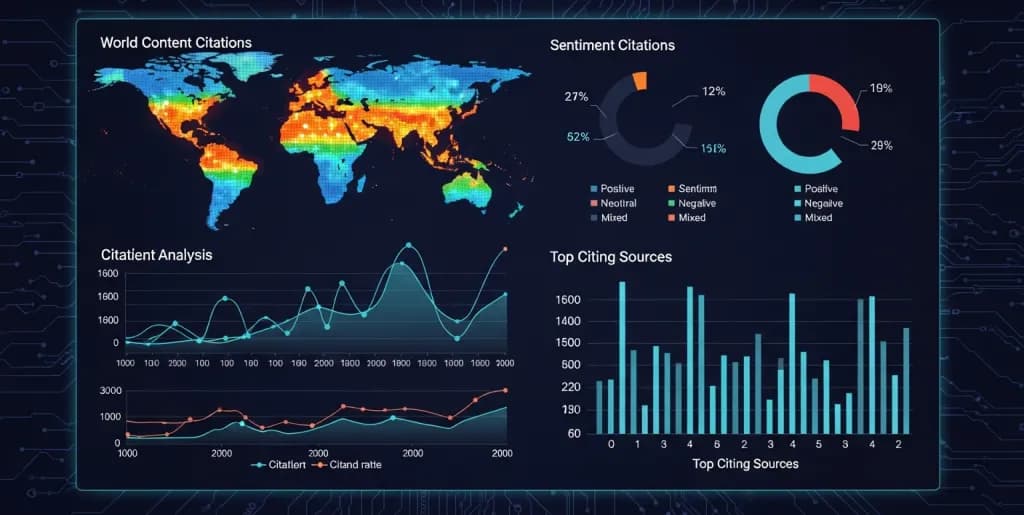
An AI citation tracking dashboard should help you answer a small set of operational questions: which prompts generate citations, which pages or brands get cited, how often you appear, and whether your visibility is improving or slipping over time.
That means the dashboard should not be a vanity wall of screenshots. It should turn repeated prompt runs and source observations into something you can review weekly or monthly to guide editorial, technical, and positioning decisions.
This guide explains the minimum viable dashboard for AI citation tracking and which fields are worth collecting first.
The 3-Layer Citation Model
The 3-Layer Citation Model is a framework for organizing AI citation measurement into three distinct layers, each answering a different question:
-
Presence Layer — "Am I being mentioned?" Track whether your brand, product, or content appears in AI-generated answers. Tools like AIclicks, Otterly, or Peec AI automate this with scheduled prompt monitoring across ChatGPT, Perplexity, Gemini, and Copilot.
-
Quality Layer — "How am I being mentioned?" Not all citations are equal. Measure citation type (source link, brand mention, direct quote, data reference), sentiment, and whether the AI correctly represents your claims. A brand mention without a link has less value than a cited source URL.
-
Impact Layer — "Does the citation drive outcomes?" Connect citation data to downstream metrics: referral traffic from AI surfaces, branded search volume changes, and conversion events. This layer is the hardest to measure but the most important — it separates vanity tracking from business intelligence.
Most teams start at Layer 1 (presence monitoring) and never progress. The teams that get strategic value from citation tracking build all three layers and review them together.
Minimum Viable Dashboard for GEO Tracking
Starting with a minimum viable product (MVP) approach for your AI citation tracking dashboard makes perfect sense. You don't need every bell and whistle from day one. Instead, focus on the core functionalities that deliver immediate, high-impact value, especially concerning geographic insights. Geo-tracking isn't just a nice-to-have; it's fundamental for understanding market penetration, identifying regional opportunities, and tailoring your content strategy.
Consider a B2B SaaS company that recently launched a comprehensive guide on cloud security. Initially, their marketing team focused on overall citation volume. However, by implementing a minimum viable AI citation tracking dashboard with basic GEO data, they quickly observed a surprising concentration of citations and mentions originating from specific regions in Southeast Asia. This insight, previously overlooked, prompted a targeted localization strategy for their content and a focused outreach campaign in those markets, ultimately boosting engagement and lead generation from those regions by over 20% within a quarter. This demonstrates the power of even basic geo-tracking.
A minimum viable dashboard for geographic tracking should prioritize a few key components:
- Citation Volume by Country/Region: This widget provides a high-level overview of where your content is being cited most frequently. It's your initial pulse check on global reach.
- Top Citing Sources by Geography: Beyond just volume, knowing who is citing you in specific regions offers crucial context. Are they influential local publications, academic institutions, or industry blogs?
- Geographic Sentiment Analysis: Understanding the emotional tone of citations within different regions is critical. Positive sentiment in a new market signals opportunity, while negative sentiment demands immediate attention.
- Regional Growth Trends: Are citations in certain geographies increasing or decreasing over time? This helps identify emerging markets or areas where your influence might be waning.
These elements form the bedrock of a geo-centric AI citation tracking dashboard. They allow you to pinpoint where your content resonates most, discover untapped markets, and understand regional nuances in perception. This foundational data empowers strategic decisions, from content localization to targeted PR efforts.
Data Model: Required Fields and Dimensions
The effectiveness of any AI citation tracking dashboard hinges on its underlying data model. This model is the blueprint for how you collect, organize, and analyze citation data. A well-structured data model ensures that your AI tools have rich, clean input, allowing them to extract meaningful insights. Think of it as the engine powering your strategic decisions.
Without a robust data model, your dashboard becomes a collection of disconnected metrics, not a source of actionable intelligence. We're talking about more than just a URL and a date; we need context, sentiment, and attribution. This structured approach allows AI to perform sophisticated analyses, from identifying thematic clusters to predicting citation trends.
Here are the essential fields and dimensions required for a comprehensive AI citation tracking data model:
Core Citation Fields
These are the fundamental pieces of information for each individual citation:
- Citation ID: A unique identifier for each tracked citation. This ensures data integrity and allows for precise referencing.
- Source URL: The exact web address where the citation appeared. This is crucial for verification and context.
- Source Domain: The root domain of the citing publication or platform. This helps in assessing the authority and type of source.
- Citation Date: The date and time the citation was published or detected. This is vital for trend analysis and timeliness.
- Cited Content ID: A unique identifier linking the citation back to your specific piece of content (e.g., blog post ID, research paper DOI, product page SKU). This enables content-level performance analysis.
- Citation Type: Categorizes how your content was cited. This could include:
- Direct Link: A hyperlink pointing to your content.
- Brand Mention: Your brand or product name is mentioned without a link.
- Direct Quote: A verbatim excerpt from your content.
- Data Reference: Specific data points or statistics from your content are cited.
- Image Use: An image from your content is used (with or without attribution).
- Citation Text/Snippet: The actual text surrounding the citation. AI tools analyze this for sentiment, keywords, and thematic relevance.
- Sentiment Score: An AI-derived score indicating the emotional tone (positive, neutral, negative) of the citation. This is critical for reputation management.
- Author/Publisher: The name of the individual author or the publishing entity of the citing content. This helps identify key influencers and media outlets.
- Reach/Authority Score: A metric indicating the influence or domain authority of the citing source. This helps prioritize high-value citations.
- Geographic Location: The inferred or declared location of the citing source (country, region, city). This powers your geo-tracking capabilities.
- Language: The language of the content where the citation appeared. Essential for multilingual analysis and content localization.
Dimensions for Analysis
These fields provide additional context, enabling deeper segmentation and strategic analysis:
- Content Category: Classifies your cited content (e.g., blog post, whitepaper, research article, press release, product review, video transcript). This helps understand which content types resonate most.
- Internal Author/Team: The internal creator or team responsible for the cited content. This enables internal performance tracking and attribution.
- Campaign ID: Links the cited content to a specific marketing or PR campaign. This measures campaign effectiveness in terms of earned media.
- Topic Tags: Keywords or thematic tags associated with your cited content. This facilitates granular analysis of topic performance.
- Industry Vertical: The industry of the citing source. This helps identify industry-specific influence and niche opportunities.
- Source Type: Categorizes the nature of the citing platform (e.g., news outlet, industry blog, academic journal, social media, forum, government publication). This helps tailor outreach strategies.
AI plays a pivotal role in populating many of these fields, especially Citation Type, Sentiment Score, Geographic Location, and Topic Tags. Natural Language Processing (NLP) models can analyze citation text to infer sentiment and extract key entities, while geo-IP lookup services can determine location. This automated data enrichment is what makes an AI-powered dashboard so powerful, moving beyond manual tagging and subjective interpretation. A clean, structured data model is the foundation for reliable, actionable intelligence.
Core Widgets and Chart Definitions
Once your data model is robust and your AI is processing citations, the next step is to visualize this information effectively. Core widgets and charts transform raw data into digestible, actionable insights. These visual components are the eyes of your AI citation tracking dashboard, allowing you to quickly grasp trends, spot anomalies, and identify opportunities. We're moving from a data dump to a strategic overview, making complex information accessible at a glance.
Each widget serves a specific purpose, designed to answer critical questions about your content's performance and influence. They are not just pretty pictures; they are strategic tools.
Here are the core widgets and chart definitions essential for any powerful AI citation tracking dashboard:
1. Citation Volume Trend (Line Chart)
- Purpose: To visualize the overall volume of citations over a specified period (e.g., daily, weekly, monthly). It quickly shows if your content's reach is growing, stable, or declining.
- Data Source:
Citation Date,Citation ID. - Interpretation: An upward trend indicates increasing visibility and influence. Sudden spikes might correlate with specific content launches or PR events. Dips warrant investigation into content strategy or market shifts.
- Actionable Insight: Helps assess the effectiveness of long-term content strategies and identify the impact of specific campaigns. You can overlay internal content publication dates to see direct correlations.
2. Top Citing Sources (Bar Chart or Table)
- Purpose: To identify the most influential or frequent sources citing your content. This highlights your key advocates and potential partners.
- Data Source:
Source Domain,Reach/Authority Score,Citation ID. - Interpretation: High-authority domains appearing frequently signal strong brand recognition and trust within influential circles. A long tail of diverse sources indicates broad reach.
- Actionable Insight: Prioritize outreach to high-authority sources for potential collaborations, guest posts, or further content distribution. Identify new media opportunities based on their citation patterns.
3. Geographic Distribution (Heatmap or Choropleth Map)
- Purpose: To visually represent where your citations are originating globally or regionally. This is crucial for market analysis and localization strategies.
- Data Source:
Geographic Location,Citation ID. - Interpretation: Darker areas on the map indicate higher citation density. This immediately highlights your strongest markets and potential growth regions.
- Actionable Insight: Inform content localization efforts, identify new markets for targeted advertising, or detect unexpected international interest in your offerings.
4. Sentiment Breakdown (Donut Chart)
- Purpose: To provide a quick overview of the emotional tone of your citations (positive, neutral, negative). This is vital for reputation management.
- Data Source:
Sentiment Score,Citation ID. - Interpretation: A high percentage of positive sentiment is ideal. Any significant increase in negative sentiment demands immediate attention and investigation.
- Actionable Insight: Proactively address negative mentions, amplify positive feedback, and understand how your content is being perceived emotionally across the board.
5. Content Performance (Bar Chart or Table)
- Purpose: To show which of your specific content assets are generating the most citations. This helps identify your top-performing content.
- Data Source:
Cited Content ID,Content Category,Citation ID. - Interpretation: Content pieces with high citation counts are your "goldmines." They resonate strongly with your audience and the broader ecosystem.
- Actionable Insight: Double down on successful content themes, repurpose high-performing assets into different formats, and analyze the characteristics of your most cited pieces to inform future content creation.
6. Citation Type Distribution (Pie Chart)
- Purpose: To break down the types of citations received (e.g., direct links, mentions, quotes, data references). This offers insight into how your content is being utilized.
- Data Source:
Citation Type,Citation ID. - Interpretation: A high proportion of direct links indicates strong SEO value and content authority. Many direct quotes or data references suggest your content is seen as a credible source of information.
- Actionable Insight: Adjust your content strategy to encourage desired citation types (e.g., create more data-rich content for data references, or more quotable soundbites for direct quotes).
7. Keyword/Topic Cloud (Word Cloud or Table)
- Purpose: To visualize the most frequently occurring keywords and topics within your citation snippets. This uncovers emerging themes and how your content is being contextualized.
- Data Source:
Citation Text/Snippet(processed by AI for keyword extraction). - Interpretation: Larger words or higher frequency in a table indicate dominant themes. This helps understand the narrative surrounding your content.
- Actionable Insight: Discover new keyword opportunities, refine your content's messaging, and identify unexpected ways your content is being discussed.
These core widgets collectively provide a holistic, dynamic view of your content's impact. They empower your team to move beyond guesswork, making data-driven decisions that enhance your brand's reach and influence. The visual nature of these charts ensures that complex data is quickly understood, driving faster, more informed strategic responses.
Alert Thresholds and Escalation Logic
An AI citation tracking dashboard isn't just a passive display of data; it's an active monitoring system. The real power emerges when you configure alert thresholds and establish clear escalation logic. This transforms your dashboard from a reactive reporting tool into a proactive warning system, allowing you to seize opportunities and mitigate risks before they escalate. We're moving from simply observing trends to actively responding to them.
Setting up intelligent alerts ensures that critical events—both positive and negative—don't go unnoticed. It's about being informed in real-time, enabling swift and decisive action. This proactive stance can be the difference between a minor issue and a full-blown crisis, or between a missed opportunity and a significant strategic win.
Why Alerts?
- Early Warning System: Detects anomalies or significant events as they happen, not days later.
- Reputation Management: Quickly identifies negative sentiment spikes that could harm your brand.
- Opportunity Identification: Flags high-value citations or emerging trends that warrant immediate attention.
- Resource Optimization: Directs team attention to where it's most needed, preventing wasted effort on routine monitoring.
Types of Thresholds
Thresholds define what constitutes an "alert." They should be tailored to your specific business objectives and historical data.
- Volume Drop/Spike:
- Threshold: A sudden increase or decrease (e.g., 20% deviation from the 7-day moving average) in overall citation volume or for a specific content piece.
- Trigger: A new piece of content goes viral, or a major external event impacts your content's visibility.
- Negative Sentiment Spike:
- Threshold: A significant increase (e.g., 15% rise in negative sentiment within 24 hours) in negative citations, especially from high-authority sources.
- Trigger: A product flaw is discovered, a controversial statement is misattributed, or a competitor launches a negative campaign.
- High-Authority Source Mention:
- Threshold: Any citation from a pre-defined list of top-tier media outlets, industry influencers, or academic journals (e.g., Forbes, New York Times, Gartner, specific university research groups).
- Trigger: A major publication features your research, or an industry leader references your product.
- Competitor Mentions (if tracked):
- Threshold: A sudden surge in citations for a key competitor, or a significant shift in their sentiment.
- Trigger: A competitor launches a new product, secures major funding, or faces public scrutiny.
- Geographic Anomaly:
- Threshold: An unexpected volume of citations from a new, previously inactive geographic region, or a sudden drop in a historically strong region.
- Trigger: Your content unexpectedly gains traction in an emerging market, or a local market experiences a shift in interest.
Setting Thresholds
Effective threshold setting combines historical data analysis with business context:
- Baseline Analysis: Understand your normal citation patterns. What's an average daily volume? What's the typical sentiment distribution?
- Statistical Methods: Use standard deviations or percentage changes from a rolling average to identify statistically significant deviations.
- Business Context: Some events are more critical than others. A negative mention from a niche blog might be a Level 1 alert, while the same from a national news outlet is a Level 3.
Escalation Logic
Once an alert is triggered, a clear escalation path ensures the right people are informed and can act quickly. This structured response prevents confusion and ensures accountability.
- Level 1: Internal Notification:
- Trigger: Minor deviations, general positive mentions from mid-tier sources.
- Action: Automated email, Slack message, or internal dashboard notification to the relevant content, marketing, or PR team.
- Example: "Citation volume for 'AI Citation Tracking Dashboard' increased by 15% in the last 24 hours. Check new sources."
- Level 2: Manager Review:
- Trigger: Moderate negative sentiment spikes, significant volume changes, mentions from moderately influential sources.
- Action: Notification to team lead or department manager, requiring a quick review and initial assessment.
- Example: "Negative sentiment for Product X increased by 10% from 3 new sources. Review required by Marketing Lead."
- Level 3: Executive Involvement:
- Trigger: Severe negative sentiment from high-authority sources, major brand crises, critical competitive intelligence, or significant strategic opportunities.
- Action: Immediate notification to senior management, PR crisis team, or relevant executive stakeholders. This often requires a pre-defined crisis communication plan.
- Example: "Major national news outlet published a critical article citing our CEO. Immediate review by PR Director and Legal."
Consider a scenario: A sudden 30% drop in citations for our flagship product over 24 hours triggers a Level 1 alert, notifying the product marketing team. Simultaneously, if the sentiment for those remaining citations also dips below 60% positive, the system automatically escalates this to a Level 2 alert, prompting a deeper dive by the product and marketing leads. This multi-layered approach ensures that routine fluctuations are noted, while critical issues receive immediate, high-level attention. This proactive capability is where the AI citation tracking dashboard truly shines, transforming data into strategic agility.
Weekly Reporting Template
A powerful AI citation tracking dashboard needs a clear, consistent reporting mechanism. The weekly report isn't just a summary; it's a strategic communication tool that translates complex data into actionable insights for various stakeholders. It bridges the gap between the raw metrics on your dashboard and the strategic decisions made by your team and leadership. This template ensures that every week, you're delivering value, clarity, and direction.
The goal is to move beyond simply presenting numbers. We want to tell a story, highlight key takeaways, and recommend concrete actions. This report should be concise, visually appealing, and tailored to its audience, ensuring that everyone from content creators to executives understands the impact of your citation strategy.
Here’s a comprehensive weekly reporting template:
AI Citation Tracking Weekly Report
Date: [Current Date] Reporting Period: [Start Date] – [End Date] Prepared By: [Your Name/Team]
1. Executive Summary
- Key Highlights: A brief, high-level overview of the most significant trends, achievements, or challenges from the past week. What's the single most important thing stakeholders should know?
- Example: "Overall citation volume increased by 12% this week, driven by strong performance in our European markets. Negative sentiment remained low, with one minor incident quickly addressed."
- Urgent Actions/Recommendations: Any immediate strategic implications or actions required based on the week's data.
- Example: "Recommend exploring partnership opportunities with new high-authority sources identified in Germany. Monitor competitor X's recent product launch for impact on our market share."
2. Performance Overview
- Overall Citation Volume:
- Metric: Total citations this week.
- Trend: % change from previous week, % change from 4-week average.
- Visual: Line chart showing weekly citation volume over the last 8-12 weeks.
- Average Sentiment Score:
- Metric: Average sentiment score (e.g., 1-5 scale) or % positive/neutral/negative.
- Trend: % change from previous week.
- Visual: Donut chart showing current sentiment distribution.
- Total Reach/Authority of Citing Sources:
- Metric: Aggregate authority score of all citing sources this week.
- Trend: % change from previous week.
- Visual: Bar chart comparing average authority score this week vs. previous weeks.
3. Geographic Insights
- Top Performing Regions:
- Metric: List top 3-5 countries/regions by citation volume.
- Observation: Any significant shifts or new emerging regions.
- Visual: Heatmap or choropleth map highlighting citation density.
- Regional Trends:
- Metric: % change in citation volume for key target regions.
- Observation: Are specific regional campaigns gaining traction?
- Example: "Citations from France increased by 25% following the localized content push."
4. Top Performing Content
- Most Cited Internal Assets:
- Metric: List top 3-5 of your content pieces by citation count this week.
- Observation: Why did these pieces resonate? Any specific themes or formats?
- Example: "Our 'Guide to AI Ethics' continues to be a strong performer, cited by 2 new academic journals."
- New High-Impact Citations:
- Metric: List 2-3 notable citations from high-authority sources, regardless of volume.
- Observation: Include snippet and source details.
- Example: "Featured in TechCrunch for our recent innovation in quantum computing."
5. Key Citing Sources
- New Influential Sources:
- Metric: List 3-5 new domains (with high authority) that cited your content this week.
- Observation: Potential partnership opportunities or new audience segments.
- Recurring Advocates:
- Metric: Identify sources that consistently cite your content.
- Observation: These are your brand champions; consider direct engagement.
6. Emerging Trends & Anomalies
- Unexpected Themes:
- Observation: Any new keywords or topics emerging from citation text analysis.
- Example: "Noticed an increase in citations linking our product to 'sustainable AI practices,' a new angle for our messaging."
- Alerts Triggered:
- Metric: Summary of any Level 2 or Level 3 alerts from the past week.
- Action Taken: Briefly describe how the alert was addressed.
- Example: "Level 2 alert for negative sentiment spike on Product Z was triggered; PR team engaged, issue resolved within 4 hours."
7. Recommendations and Actions
- Content Strategy:
- Recommendation: Based on content performance, what content should be created, updated, or promoted?
- Example: "Develop a follow-up piece to 'Guide to AI Ethics' focusing on practical implementation challenges."
- PR/Outreach:
- Recommendation: Which sources should be targeted for outreach? Any specific messaging?
- Example: "Initiate outreach to the newly identified German tech blogs for potential collaborations."
- Product/Brand:
- Recommendation: Any insights for product development, brand messaging, or reputation management?
- Example: "Review user feedback related to the negative sentiment spike on Product Z to inform future updates."
Audience Tailoring
Remember, the report format and depth should adapt to its audience:
- Marketing/PR Teams: Focus on content performance, source identification, and campaign effectiveness.
- Product Teams: Emphasize how products are cited, sentiment around features, and competitive mentions.
- Sales Teams: Highlight regions with high citation activity, influential sources, and positive brand mentions that can be leveraged in sales pitches.
- Leadership/Executives: Concise executive summary, strategic implications, and high-level trends.
This structured weekly report ensures that your AI citation tracking dashboard's insights are consistently communicated, driving a culture of data-informed decision-making across the organization. It transforms raw data into a compelling narrative of influence and strategic opportunity.
Decision Rules from Dashboard Signals
The true value of an AI citation tracking dashboard isn't just in presenting data; it's in enabling decisive, data-driven action. Without clear decision rules, even the most sophisticated dashboard is just a fancy display. These rules translate specific signals from your dashboard into concrete strategic moves, ensuring that your team consistently leverages insights for growth, risk mitigation, and continuous improvement. We're moving from "what happened?" to "what do we do now?"
This framework helps standardize responses, reduces analysis paralysis, and ensures that every significant shift in your citation landscape is met with an appropriate, pre-defined action. It's about empowering your team to be proactive, not just reactive.
Here are examples of decision rules, linking common dashboard signals to actionable strategies:
If Citation Volume Drops Significantly (e.g., 20% week-over-week for overall or key content):
- Signal: Your content's visibility or relevance might be diminishing.
- Decision Rule:
- Investigate Root Cause: Immediately analyze recent content strategy changes, competitor activity, market shifts, or algorithm updates.
- Content Audit: Review underperforming content for freshness, accuracy, and SEO optimization.
- Promotion Boost: Increase promotional efforts for high-performing evergreen content.
- Competitor Analysis: Deep dive into what competitors are doing to gain citations.
- Old Way vs. New Way: Manually tracking might miss this drop for weeks, leading to prolonged underperformance. The AI dashboard flags it instantly, allowing for rapid course correction.
If Negative Sentiment Spikes (e.g., 15% increase in negative citations within 24 hours):
- Signal: Potential reputation damage or a brewing crisis.
- Decision Rule:
- Immediate Investigation: Pinpoint the exact source(s) and content of the negative sentiment. Is it a product issue, a misstatement, or misinformation?
- Engage PR/Support Teams: Activate crisis communication protocols. Draft holding statements, prepare FAQs, and engage directly with affected parties if appropriate.
- Internal Review: Inform relevant product, legal, or executive teams for their input and potential action.
- Monitor Closely: Set up hyper-focused alerts for continued monitoring of the specific issue.
- Old Way vs. New Way: Manual tracking is too slow; a negative trend could become viral before detection. AI sentiment analysis and alerts provide real-time warning, enabling rapid response and damage control.
If a New Geographic Hotspot Emerges (e.g., 50% increase in citations from a previously inactive country):
- Signal: Untapped market opportunity or unexpected international interest.
- Decision Rule:
- Market Research: Conduct quick research on the demographics, language, and cultural nuances of the emerging region.
- Localization Strategy: Explore localizing existing high-performing content or creating new content tailored to that market.
- Targeted Marketing: Initiate small-scale, targeted advertising or PR campaigns in the region.
- Partner Outreach: Identify potential local influencers or media partners for collaboration.
- Old Way vs. New Way: Without geo-tracking, this opportunity might remain completely invisible. The AI dashboard highlights it, allowing for proactive market entry.
If a Specific Content Piece Consistently Outperforms (e.g., remains in top 3 cited assets for 4+ weeks):
- Signal: This content resonates deeply and provides significant value.
- Decision Rule:
- Repurpose and Amplify: Convert the content into different formats (e.g., webinar, infographic, video, podcast episode).
- Create Follow-Up Content: Develop related articles, deeper dives, or case studies building on the successful theme.
- Update and Refresh: Ensure the content remains current and accurate to maintain its long-term value.
- Internal Case Study: Analyze why this content performs well to inform future content strategy.
- Old Way vs. New Way: Sporadic checks might identify popular content, but without consistent tracking, the full potential for repurposing and strategic extension is often missed.
If High-Authority Sources Cite Us Frequently (e.g., 3+ mentions from top-tier media in a month):
- Signal: Strong brand credibility and influence within key industry circles.
- Decision Rule:
- Nurture Relationships: Engage directly with these sources, offering exclusive insights, interviews, or early access to new content.
- Explore Co-creation: Propose joint research, webinars, or articles to further cement partnerships.
- Leverage Mentions: Use these citations in PR materials, sales collateral, and internal communications to boost credibility.
- Monitor Competitor Mentions: See if these same sources are citing competitors, and analyze the context.
- Old Way vs. New Way: Manually tracking high-authority mentions is tedious and prone to gaps. The AI dashboard automatically flags and prioritizes these invaluable endorsements.
If Competitor X Sees a Spike in Citations for a New Product Launch:
- Signal: Potential threat or new market trend.
- Decision Rule:
- Competitive Analysis: Deep dive into the competitor's new product, its features, and the narrative surrounding its launch.
- Internal Strategy Review: Assess your own product roadmap and marketing messages in light of this new development.
- Counter-Messaging: Prepare proactive content or PR responses if the competitor's launch directly impacts your market position.
- Identify Gaps: Look for areas where your offerings can differentiate or where the competitor might be vulnerable.
By implementing these clear decision rules, your AI citation tracking dashboard becomes a powerful engine for strategic growth. It transforms data into a dynamic feedback loop, ensuring that every insight translates into a tangible, impactful action. This proactive, data-informed approach is what sets leading organizations apart in today's competitive landscape.
Implementation Checklist
Setting up an AI citation tracking dashboard might seem like a monumental task, but with a structured approach, it becomes manageable and highly rewarding. This implementation checklist breaks down the process into actionable phases, guiding you from initial planning to ongoing iteration. We're providing a step-by-step roadmap to ensure your deployment is smooth, efficient, and ultimately, successful.
Think of this as your project plan, ensuring no critical step is missed. Each phase builds upon the last, creating a robust and effective system.
Phase 1: Planning & Setup
- Define Objectives and KPIs:
- Action: Clearly articulate what you want to achieve with the dashboard (e.g., increase brand visibility, improve reputation management, identify new markets).
- Action: Establish Key Performance Indicators (KPIs) that will measure success (e.g., average sentiment score, citation volume growth, number of high-authority mentions).
- Identify Data Sources:
- Action: Determine where your citation data will come from. This might include:
- Web scraping tools (for broad web mentions).
- API integrations (e.g., news aggregators, social listening platforms, academic databases).
- Proprietary content management systems (to link citations to your content IDs).
- Action: Determine where your citation data will come from. This might include:
- Select AI Tools for Enrichment:
- Action: Choose AI services or libraries for:
- Sentiment analysis (to score emotional tone).
- Entity extraction (to identify key people, organizations, locations).
- Topic modeling/keyword extraction (to understand themes).
- Geographic tagging (to determine source location).
- Action: Choose AI services or libraries for:
- Design the Data Model:
- Action: Map out all required fields and dimensions as discussed previously (Citation ID, Source URL, Sentiment Score, Geographic Location, Cited Content ID, etc.).
- Action: Define data types, relationships, and primary keys.
- Choose a Dashboard Platform:
- Action: Select a visualization tool (e.g., Tableau, Power BI, Looker Studio, custom-built application). Consider scalability, integration capabilities, and ease of use.
Phase 2: Data Ingestion & Processing
- Set Up Data Connectors:
- Action: Implement the necessary connectors to pull data from your identified sources into a central data warehouse or database.
- Action: Configure authentication and data access permissions.
- Implement Data Cleaning and Normalization:
- Action: Develop scripts or use tools to clean raw data (e.g., remove duplicates, standardize formats, handle missing values).
- Action: Normalize data to ensure consistency across different sources.
- Configure AI Models:
- Action: Integrate your chosen AI tools into the data pipeline.
- Action: Train or fine-tune AI models if necessary (e.g., custom sentiment models for industry-specific jargon).
- Action: Ensure AI outputs are correctly mapped to your data model fields.
- Establish Data Refresh Schedules:
- Action: Define how frequently data will be ingested and processed (e.g., hourly, daily, weekly), based on your objectives and data source capabilities.
Phase 3: Dashboard & Reporting Development
- Build Core Widgets:
- Action: Design and implement the essential dashboard widgets (e.g., Citation Volume Trend, Geographic Distribution, Sentiment Breakdown) using your chosen platform.
- Action: Ensure charts are clear, interactive, and visually appealing.
- Define Alert Thresholds:
- Action: Configure the specific thresholds for each type of alert (e.g., volume drops, sentiment spikes, high-authority mentions).
- Action: Set up the notification mechanisms (email, Slack, in-dashboard alerts).
- Develop Reporting Templates:
- Action: Create the weekly reporting template, including sections for executive summary, performance overview, geographic insights, etc.
- Action: Automate report generation where possible.
- User Acceptance Testing (UAT):
- Action: Involve key stakeholders (marketing, PR, product teams) in testing the dashboard.
- Action: Gather feedback on usability, accuracy, and relevance of insights.
Phase 4: Training & Iteration
- Train Users:
- Action: Conduct training sessions for all potential users, explaining how to navigate the dashboard, interpret the data, and utilize the insights.
- Action: Provide documentation and cheat sheets.
- Gather Feedback & Iterate:
- Action: Establish a feedback loop for ongoing improvements. What's working? What's missing? What needs refinement?
- Action: Continuously refine the dashboard layout, data model, AI configurations, and reporting based on user needs and evolving business objectives.
- Regular Data Model Review:
- Action: Periodically review your data model to ensure it remains relevant and robust as your content strategy or market landscape changes. Add new dimensions or fields as needed.
By following this comprehensive checklist, you'll systematically build an AI citation tracking dashboard that not only monitors your influence but actively contributes to your strategic decision-making. This structured approach ensures that your investment in AI and data analytics yields tangible, measurable results.
Quick takeaways
- A useful dashboard tracks prompts, cited sources, brand presence, and visibility trend over time.
- The MVP is a repeatable prompt set plus clean logging, not an overly complex BI setup.
- Review cadence matters: daily is noise for most teams, weekly or monthly is usually enough.
References
- Google Search Central: About AI features and your website
- OpenAI: Publishers and developers FAQ
- Anthropic: Web crawling and blocking guidance