
Understanding Real-Time vs. Periodic Search Performance Tracking
Discover when to use real-time search performance tracking versus periodic monitoring. Learn the costs, benefits, and best strategies for SEO data velocity.
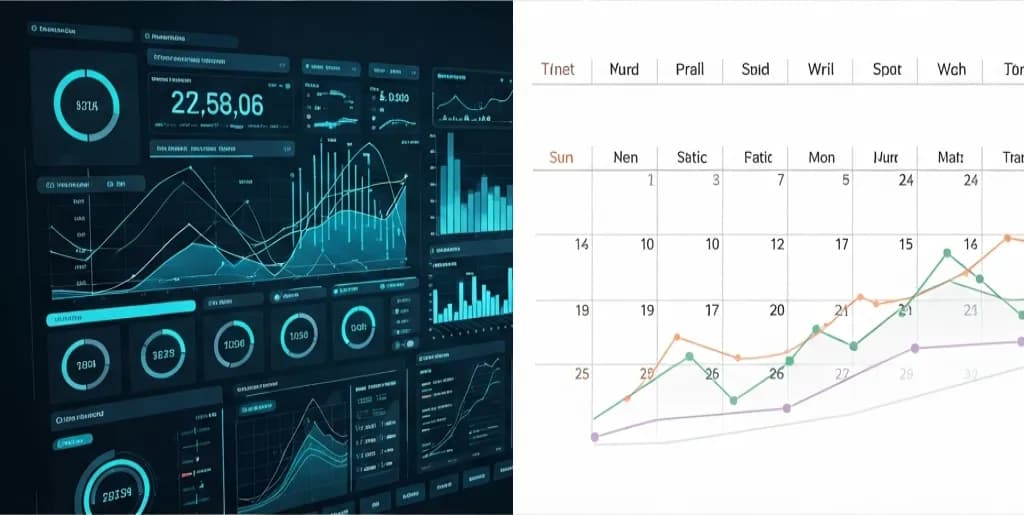
Real-time search performance tracking is useful when you need to spot technical problems or high-impact changes immediately. Periodic tracking is more useful when you are evaluating trends, content performance, and strategic movement over weeks or months.
Most teams do not need everything in real time. They need the right data at the right cadence, with enough context to know whether they are reacting to noise or to a real shift.
This guide explains where real-time monitoring helps, where scheduled reporting is better, and how to choose the right cadence.
Why You Need to Master Search Performance
Ignoring your search performance is like navigating a ship without a compass. You're just drifting. Knowing what's happening with your organic traffic, your rankings, and your user behavior is non-negotiable. It's your feedback loop. It tells you what's working, what's broken, and where to focus your energy next.
You're not just guessing anymore. You're making data-driven decisions. This leads to smarter content, better technical SEO, and ultimately, more visibility and conversions. It’s the difference between hoping for success and actively building it.
What is Real-Time Search Performance Tracking?
Think of real-time search performance tracking as your website's live heartbeat monitor. It gives you an immediate, up-to-the-second view of what's happening on your site right now. This isn't data from yesterday or even an hour ago. It's happening as you watch it.
This type of tracking uses live data streams. Tools constantly pull information about active users, their locations, the pages they're viewing, and how they arrived. You see the immediate impact of your actions.
The Power of Immediate Insights
The biggest benefit? Instant feedback. You launch a new blog post, fix a broken link, or push a new product page live. Real-time tracking shows you the immediate ripple effect. You're not waiting for a report; you're seeing the action unfold.
This immediacy is crucial for rapid response. Spot a sudden traffic surge? Great! A sudden drop? You can investigate now. This proactive approach can save you from massive headaches or help you capitalize on unexpected opportunities. It's about agility.
Spotting Anomalies and Opportunities Instantly
Real-time data excels at highlighting the unusual. A sudden spike in users from a specific source might indicate a viral share or a mention you didn't anticipate. A sudden drop, on the other hand, could signal a technical issue, a broken link, or even a server problem.
You become a digital detective, catching issues before they escalate. Or, you become a quick-footed opportunist, jumping on trends as they emerge. This is where real-time search performance tracking truly shines.
Essential Tools for Live Monitoring
You don't need a supercomputer for this. Several accessible tools offer powerful real-time capabilities.
- Google Analytics 4 (GA4): Its "Realtime" report is your go-to. You see active users, top pages, traffic sources, and conversions happening right now. It's a must-have.
- Google Search Console (GSC): While not truly "real-time" for rankings, GSC does update its "Performance" report daily. For immediate indexing checks, the "URL Inspection" tool can tell you if a page is indexed or has issues quickly.
- Specialized SEO Tools: Some premium SEO platforms offer more granular real-time data, especially for keyword ranking fluctuations or competitor movements. These are often for more advanced users.
Real-World Use Cases for Real-Time Tracking
When does this immediate feedback become absolutely critical?
- Campaign Launches: You just pushed a new marketing campaign live. Is traffic hitting the right landing page? Are people converting? Real-time tells you if your funnel is working immediately.
- Technical Fixes: You just fixed a critical error, like a broken internal link or a server issue. Are users returning? Is the site functioning as expected? You'll know in minutes.
- Viral Content: Your latest blog post just got picked up by a major influencer. Watch the traffic explode. Understand where it's coming from. This helps you amplify the success.
- A/B Testing: Running a live test on a landing page? Real-time data can give you early indicators of which variation is performing better, though you'll need more data for statistical significance.
A Concrete Case: The Broken Form
I remember a client launching a new service page, a crucial part of their lead generation strategy. We were glued to the real-time analytics in Google Analytics 4. Within minutes of the launch, we saw a good amount of traffic hitting the page, but a sudden, alarming drop in a key conversion metric: form submissions. People were on the page, but not converting.
A quick check revealed a brutal truth: the form submission button was broken. It was a simple coding error that slipped through testing. Because we were monitoring in real-time, we caught it almost instantly. The development team pushed a fix within 15 minutes. This immediate response saved them potentially thousands in lost leads and prevented a massive setback for their new service. Without real-time tracking, that issue might have gone unnoticed for hours, or even days.
What is Periodic Search Performance Tracking?
Now, let's shift gears. Periodic search performance tracking is about stepping back. It's like reviewing your ship's logbook at the end of a long voyage. You're looking at trends, patterns, and overall progress over defined periods: daily, weekly, monthly, quarterly, or even annually. This isn't about what's happening right now, but what has happened and is happening over time.
This method involves scheduled data pulls and historical analysis. You're comparing current performance against past performance, looking for sustained growth, declines, or shifts. It's about the bigger picture, the long game.
The Value of Long-Term Trends
Periodic tracking reveals the true trajectory of your SEO efforts. Did that content strategy you implemented three months ago actually boost organic traffic? Is your site gaining authority over time? Are you consistently ranking higher for your target keywords?
You can't answer these questions with real-time data alone. Periodic reports show you the cumulative effect of your work. They highlight seasonal trends, algorithm update impacts, and the long-term effectiveness of your content and technical optimizations.
Strategic Planning and Comprehensive Reporting
This is where strategy comes into play. Periodic data provides the foundation for your next moves. You analyze monthly reports to identify content gaps, assess keyword performance, and understand user behavior over a broader context. This informs your next quarter's content calendar, your link-building strategy, and your technical roadmap.
It's also essential for comprehensive reporting to stakeholders. Your boss, your clients, or your team members need to see consistent progress. Periodic reports offer the structured data needed to demonstrate ROI and justify ongoing SEO investments.
Key Tools for Periodic Analysis
You'll rely on robust platforms designed for historical data aggregation and analysis.
- Google Search Console (GSC): This is your absolute powerhouse for periodic search performance. Its "Performance" report shows clicks, impressions, average CTR, and average position for specific queries and pages over 3, 6, 12, or 16 months. It's brutal in its honesty and incredibly valuable.
- Google Analytics (GA4): While it has real-time, its standard reports (Traffic acquisition, Engagement, Monetization) are fantastic for understanding user behavior, conversions, and traffic sources over time. You can compare date ranges to see changes.
- Rank Trackers: Tools like Semrush, Ahrefs, or Moz track your keyword rankings over time. They show you if your positions are improving, declining, or holding steady across hundreds or thousands of keywords.
- Analytics Platforms: Beyond Google's tools, many other platforms offer deeper insights into user journeys, funnel analysis, and segment performance over extended periods.
Real-World Use Cases for Periodic Tracking
When do you lean on the power of historical data?
- Monthly Reports: Essential for showing progress, identifying top-performing content, and pinpointing areas needing improvement.
- Quarterly Reviews: A deeper dive into overall strategy effectiveness, budget allocation, and goal attainment.
- Content Strategy: Analyzing which content types perform best over time helps you refine your content calendar for the next six months.
- Competitor Analysis: Tracking competitor rankings and traffic trends over months reveals their strategic shifts and helps you counter them.
- Algorithm Update Impact: Google pushes updates regularly. Periodic data lets you see the sustained impact on your traffic and rankings, not just the initial blip.
A Concrete Case: Navigating an Algorithm Update
After a major Google core algorithm update, I've consistently advised clients to resist knee-jerk reactions. Panic can lead to bad decisions. Instead, we lean heavily on periodic tracking. For one client, we observed an initial 15% dip in organic traffic and a noticeable drop in average position for several key terms in the days following the update.
Rather than immediately overhauling their entire content library, we tracked their weekly and monthly performance using GSC and a dedicated rank tracker. Over the next eight weeks, the periodic data revealed something crucial: while some content categories remained down, others were slowly but steadily recovering. We identified specific content clusters that Google seemed to be re-evaluating positively. This allowed us to strategically update and improve the underperforming content categories, rather than wasting resources on everything. This measured, data-driven approach, informed by periodic tracking, led to a full recovery and even growth within three months, avoiding costly, unnecessary reworks.
The Core Differences: Speed, Scope, and Strategy
You now understand the basics of both. Let's hammer home the core distinctions. It's not about which one is "better." It's about understanding their unique strengths.
- Speed of Data: Real-time is now. Periodic is over time. This is the most obvious difference.
- Scope of Insight: Real-time gives you a snapshot of current activity. Periodic provides a comprehensive narrative of your performance history and trends.
- Actionability: Real-time drives immediate, tactical adjustments. Periodic informs strategic, long-term planning and major overhauls.
- Focus: Real-time focuses on immediate user behavior and technical health. Periodic focuses on overall SEO health, content effectiveness, and market positioning.
- Data Volume: Real-time often deals with a smaller, more focused set of metrics for immediate action. Periodic processes massive amounts of historical data for deep analysis.
Think of it like being a coffee shop owner. Real-time is watching the espresso machine, making sure each shot pulls perfectly right now. Periodic is reviewing your daily sales reports, seeing which coffee blends are popular over weeks, and planning your next seasonal menu. Both are vital, but for different reasons.
When to Use Which: A Strategic Playbook
This is where you become the master. Knowing when to deploy each tracking method is your superpower.
When to Go Real-Time: Your Immediate Action Guide
You need real-time data when speed and immediate impact are paramount.
- Post-Launch Monitoring: After deploying a new website, a major redesign, or a critical landing page. You're checking for immediate bugs, traffic flow, and conversion hits.
- Troubleshooting: If you suspect a technical issue (site down, slow loading, broken forms), real-time data can confirm the problem and show the impact of your fix.
- Event-Driven Spikes: During a live event, a flash sale, or when a major news outlet mentions your brand. You're capitalizing on immediate attention.
- Content Virality: When a piece of content unexpectedly takes off, real-time helps you understand its reach and potential.
- Ad Campaign Performance: While not strictly organic search, real-time data helps you see if paid traffic is hitting the right pages and converting, which can influence your organic strategy.
When to Go Periodic: Your Long-Term Strategy Guide
Periodic data is your strategic compass, guiding your long-term vision.
- Monthly/Quarterly Reporting: For stakeholders, clients, or internal teams, you can use monthly SEO reporting to communicate progress against business objectives. You're showing progress, identifying trends, and justifying investments.
- Content Strategy Development: Analyzing what content performed best over the last year informs your next year's content calendar.
- Algorithm Update Analysis: Understanding the sustained impact of Google updates on your rankings and traffic, allowing for measured responses.
- Competitive Benchmarking: Tracking your performance against competitors over months reveals market shifts and strategic opportunities.
- SEO Audits: A comprehensive audit relies heavily on historical data to identify long-standing issues or areas for improvement.
- Goal Setting: Setting realistic, data-backed SEO goals for the next quarter or year.
The Synergy: Combining Both for Maximum Impact
Here's the brutal truth: you need both. They are two sides of the same coin. Using only one leaves you blind.
- Real-time identifies the "what" now. "Traffic just dropped!"
- Periodic explains the "why" over time. "That drop is part of a larger, seasonal decline we see every year, or it's a new, sustained issue."
Imagine you're a doctor. Real-time is checking a patient's pulse and blood pressure right now. Periodic is reviewing their medical history, annual check-ups, and long-term health trends. You need both to provide the best care.
Your optimal strategy involves using real-time for immediate monitoring and troubleshooting, then using periodic data to put those observations into context, track long-term progress, and inform your overarching SEO strategy. They work in tandem, creating a powerful, holistic view of your search performance.
Tools and Infrastructure for Tracking
You must select the right technology stack to support your tracking architecture. Different tools serve different data velocity requirements.
Server Log Analysis Platforms
Log analysis platforms are the foundation of continuous technical tracking. Tools like Splunk, Datadog, or ELK Stack (Elasticsearch, Logstash, Kibana) ingest your server logs in real-time. You use these platforms to build dashboards that visualize exactly how search engine bots interact with your infrastructure minute by minute.
API Integrations and Data Warehouses
To bridge the gap between continuous and scheduled data, you must utilize APIs. Connect the Google Search Console API and your web analytics API to a data warehouse like Google BigQuery. This allows you to bypass the interface limitations of standard tools, store historical data indefinitely, and run complex SQL queries to uncover deep performance trends.
Third-Party SEO Platforms
Standard SEO platforms (like Ahrefs, Semrush, or Moz) are designed for scheduled tracking. They utilize proprietary crawlers to update keyword rankings and backlink profiles on a daily or weekly cadence. Use these tools for competitive analysis, keyword research, and broad market share tracking. Do not rely on them for immediate technical alerts.
Practical Steps for Effective Tracking
Ready to put this into action? Here’s a mini-checklist to get you started.
-
Set Up Your Tools:
- Ensure Google Analytics 4 is correctly installed and configured.
- Verify your website in Google Search Console.
- Consider a reliable rank tracker (e.g., Semrush, Ahrefs) if budget allows.
- Make sure all tracking codes are firing correctly.
-
Define Your KPIs:
- For Real-Time: What are you looking for right now? Active users, page views on new content, immediate conversion events (e.g., form submissions, add-to-carts).
- For Periodic: What are your long-term goals? Organic traffic growth, keyword ranking improvements, increased organic conversions, reduced bounce rate, improved site speed.
-
Set Up Alerts:
- Configure alerts in GA4 for sudden drops or spikes in traffic.
- Many rank trackers offer alerts for significant keyword ranking changes.
- Consider uptime monitoring tools that alert you if your site goes down.
-
Integrate Data Sources (Mentally or with Dashboards):
- Don't look at tools in isolation. Connect the dots.
- If GSC shows a drop in impressions for a page, check GA4 for corresponding traffic drops.
- If your rank tracker shows a keyword dip, look at GSC for specific query performance.
-
Establish a Review Cadence:
- Daily (Real-time check): Quick 5-10 minute check of GA4 Realtime report, especially after major changes.
- Weekly (Periodic check): Review GSC Performance report for significant changes, check top-level GA4 metrics.
- Monthly (Deeper Periodic): Comprehensive review of GSC, GA4, and rank tracker data. Analyze trends, identify opportunities, report to stakeholders.
- Quarterly (Strategic Periodic): Big-picture review, strategy adjustments, goal recalibration.
How to Automate SEO Reporting
Manual data extraction wastes valuable analytical time. You must automate SEO reporting to scale your operations and ensure consistent data delivery. Follow these steps to build an automated reporting pipeline. For software-layer comparisons before implementation, use this companion guide on automated SEO reporting.
Step 1: Select Your Data Sources
Identify the platforms that hold your source-of-truth data.
- Google Search Console (for impressions, clicks, and average position).
- Google Analytics 4 or Adobe Analytics (for user behavior and conversions).
- Your CRM (for pipeline and revenue attribution).
- Your technical crawling tool (for site health scores).
Step 2: Choose a Visualization Tool
Select a business intelligence tool to visualize your aggregated data. Looker Studio, Tableau, and Power BI are standard choices. Connect your data sources directly to the visualization tool using native connectors or third-party middleware.
Step 3: Define the Reporting Cadence
Determine how frequently your stakeholders need to review the data.
- Weekly Dashboards: Design these for practitioners. Include granular metrics like week-over-week traffic changes by content category and new keyword indexation.
- Monthly Reports: Design these for managers. Focus on monthly growth trends, goal completions, and high-level technical health.
- Quarterly Reviews: Design these for executives. Focus strictly on revenue attribution, ROI, and market share expansion.
Step 4: Configure Scheduled Delivery
Set up automated email delivery within your visualization tool. Schedule the monthly reports to arrive in stakeholder inboxes on the first Monday of every month. Include a brief, written executive summary alongside the automated data to provide context for the numbers.
Avoiding Common Tracking Pitfalls
Even with the best tools, you can stumble. Be aware of these common traps.
- Data Overload: Don't drown in numbers. Focus on your key performance indicators (KPIs). Too much data leads to analysis paralysis.
- Ignoring Context: A traffic drop might look brutal in real-time. But periodic data might show it's a normal seasonal dip. Always seek context.
- Acting on Insufficient Data: Don't make massive strategic shifts based on a single real-time observation. Use real-time for initial alerts, then periodic data for validation and strategic decisions.
- Tool Dependency: Tools are great, but they're just that: tools. Understand the data yourself. Don't blindly trust a single metric without understanding its implications.
- Forgetting Your Goals: Every piece of data should tie back to your business goals. If a metric doesn't help you achieve your objectives, question why you're tracking it so closely.
- Ignoring Long-Term Trends: Focusing exclusively on continuous technical monitoring causes you to miss slow, gradual declines in performance. Content decay happens over months, not minutes. You must review your scheduled reports regularly to identify pages that are slowly losing market share to newer competitor content.
- Misinterpreting Data Latency: Understand the latency of your data sources. Google Search Console data is typically delayed by 24 to 48 hours. If you launch a new page on Tuesday, do not expect to see impression data in the interface on Wednesday. Factor this latency into your reporting schedules. Never pull a monthly report on the first day of the new month; wait until the third day to ensure all data from the previous month has populated.
- Failing to Filter Brand vs. Non-Brand Data: Aggregated traffic metrics hide the true performance of your SEO strategy. A massive spike in branded search volume (due to a PR campaign or a viral social media post) will mask a decline in non-branded organic traffic. You must segment your tracking data. Monitor your non-branded search performance independently to evaluate the actual effectiveness of your SEO efforts.
Building Your Tracking Routine
Here’s a simple routine you can adopt to ensure you’re leveraging both real-time and periodic tracking effectively.
Your Daily Check-In (Real-Time Focused)
- Morning Coffee Check (5-10 minutes):
- Open Google Analytics 4 Realtime report.
- Are there any unexpected traffic spikes or drops?
- Are users on the pages you expect them to be?
- Check your site's uptime monitor (if you have one).
- Action: If you see something unusual, investigate immediately. Is a new piece of content performing exceptionally? Did a recent deployment break something?
Your Weekly Review (Periodic Focused)
- End-of-Week Scan (30-60 minutes):
- Review Google Search Console Performance report (last 7 days vs. previous 7 days).
- Look for significant changes in clicks, impressions, and average position.
- Check your top-performing queries and pages. Are there any new opportunities?
- Scan Google Analytics 4 for weekly traffic trends, user engagement, and conversion rates.
- Review your rank tracker for any major keyword shifts.
- Action: Identify small wins to double down on. Spot minor issues to address next week. Update your content calendar based on emerging trends.
Your Monthly Deep Dive (Strategic Periodic)
- Monthly Strategy Session (2-4 hours):
- Pull comprehensive data from GSC (last 28 days vs. previous period), GA4, and your rank tracker.
- Analyze overall organic traffic growth, keyword visibility, and conversions.
- Identify your top 10 performing pages and queries. What can you learn from them?
- Pinpoint underperforming content or technical areas.
- Review competitor performance if you have the tools.
- Generate a summary report for stakeholders.
- Action: Adjust your content strategy, plan technical SEO improvements, re-evaluate link-building efforts, set goals for the next month. This is where you make strategic calls.
Advanced Metrics to Track
Move beyond basic traffic and ranking metrics. Track these advanced data points to gain a competitive advantage in your search strategy.
Crawl Budget Allocation
Search engines allocate a finite amount of resources to crawl your website. You must track how they spend this budget. Use continuous log analysis to calculate your crawl ratio (the percentage of your total URLs crawled daily). Identify low-value pages (like faceted navigation or parameter URLs) that are consuming crawl budget and block them via robots.txt. Redirect that bot attention to your high-converting pages.
Indexation Status and Coverage
Tracking rankings is useless if your pages are not indexed. Use scheduled tracking via the Search Console API to monitor your index coverage at scale. Track the specific reasons for exclusion (e.g., "Crawled - currently not indexed" or "Discovered - currently not indexed"). Build automated alerts that trigger if your total number of valid indexed pages drops by more than 5% week-over-week.
Keyword Cannibalization
As your website grows, multiple pages will inevitably compete for the same search terms. Use scheduled tracking to identify keyword cannibalization. Look for high-volume keywords where the ranking URL fluctuates constantly between two or more of your pages. Consolidate these competing pages or differentiate their targeting to stabilize your rankings.
Core Web Vitals and User Experience
Page speed and user experience directly impact your search visibility. Track your Core Web Vitals (LCP, INP, CLS) using both continuous and scheduled methods.
- Continuous: Implement Real User Monitoring (RUM) scripts to track the actual load times experienced by live users. Set alerts for sudden performance drops following a code deployment.
- Scheduled: Review the Chrome User Experience Report (CrUX) data monthly to see how search engines evaluate your historical performance.
The Future of Search Performance Monitoring
The landscape is always shifting. What's next for tracking? Expect even more sophisticated tools. Artificial intelligence and machine learning are already making waves, offering predictive analytics that can foresee potential issues or opportunities before they fully materialize.
Imagine a system that not only tells you traffic dropped but also suggests why and what to do about it, based on historical patterns. This isn't science fiction; it's becoming reality. The core principles of real-time and periodic tracking will remain, but the tools will get smarter, faster, and more integrated. Your job will be to interpret these insights and act decisively.
Conclusion
Mastering search performance tracking isn't optional. It's essential. You now understand the critical difference between real-time and periodic approaches. Real-time is your immediate alert system, your pulse check. Periodic is your strategic roadmap, your historical record.
By integrating both into your routine, you gain a complete, powerful view of your online presence. You'll move from guessing to knowing, from reacting to strategically planning. Embrace both, and you'll unlock massive growth for your website and your business. Start tracking smart, starting today.
Quick takeaways
- Use real-time tracking for incidents, launches, migrations, and sudden anomalies.
- Use scheduled tracking for content, rankings, CTR, and strategic reporting.
- The mistake is not slow data or fast data; it is using the wrong cadence for the decision.
References
- Google Search Console Help
- Google Analytics Help Center
- Google Search Central: Page indexing reports