
How to Generate Leads for SaaS: The Complete Guide
Unlock SaaS growth with this complete lead generation guide covering inbound, outbound, nurturing, and measurement strategies to attract and convert customers.
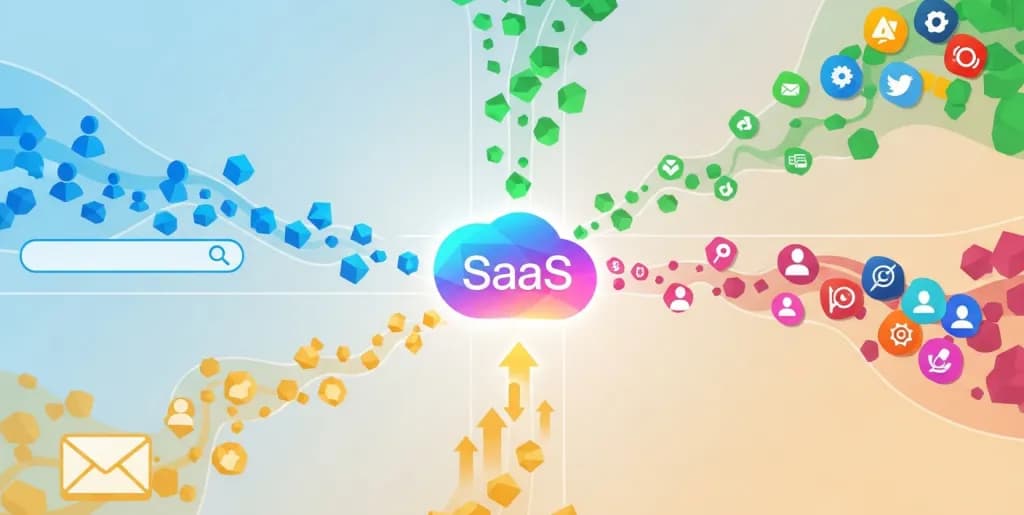
Generating leads for SaaS means creating repeatable paths that bring the right prospects into your funnel, not just increasing raw form fills. The strongest systems attract leads that match your ICP, move cleanly into follow-up, and have a realistic path to becoming paying users.
That requires more than one tactic. It requires alignment between offer, messaging, capture points, nurturing, and how your team qualifies or routes leads once they show intent.
This guide explains how to generate leads for SaaS in a way that improves both volume and fit, so growth is not just bigger but healthier.
What Does "Lead Generation" Really Mean for SaaS?
At its core, how to generate leads for SaaS means attracting and converting strangers into people interested in your product. These "leads" are individuals or companies who've shown some level of interest. They've given you their contact info, downloaded a guide, or attended a webinar. They're raising their hand, saying, "Tell me more!"
For SaaS, lead generation isn't a one-time sprint. It's a continuous, strategic marathon. You're not just selling a single item; you're inviting customers into a recurring relationship. This means your lead generation efforts must focus on quality over quantity, attracting users who will stick around.
You need to identify potential users, nurture their interest, and guide them toward becoming paying subscribers. It’s a process, a funnel, and it’s absolutely critical for your company’s survival and expansion.
Laying Your Foundation: Before You Even Think About Leads
Before you launch any lead generation campaign, you need solid groundwork. Skipping these steps is like trying to build a skyscraper on quicksand. You’ll waste time, money, and effort.
Know Your Ideal Customer Profile (ICP)
Who exactly are you trying to reach? This isn't a vague demographic. Your Ideal Customer Profile (ICP) is a detailed blueprint of the company or individual who benefits most from your SaaS.
Think about their industry, company size, revenue, and even their tech stack. What specific problems do they face that your software solves? What are their goals?
Once you have your ICP, create a buyer persona. Give this persona a name, a job title, daily challenges, and aspirations. This helps you speak directly to them, making your marketing messages resonate deeply. If you don't know who you're talking to, you can't possibly know what to say.
Nail Your Value Proposition
Why should someone choose your SaaS over a competitor, or even over doing nothing at all? Your value proposition isn’t just a list of features. It’s the core benefit your product delivers, stated clearly and concisely.
What unique problem do you solve? How do you make your customers' lives easier, more productive, or more profitable? Articulate this in a way that’s impossible to ignore. It should be the first thing a potential lead understands about your offering.
Test your value proposition. Does it immediately grab attention? Does it explain the "why" in seconds? Clarity and impact are your best friends here.
Optimize Your Website and Content for Conversion
Your website is your digital storefront, your 24/7 sales rep. Is it welcoming? Is it easy to navigate? Does it guide visitors towards action?
Every page, especially landing pages, needs to be optimized for conversion. This means:
- Fast Loading Speed: No one waits around. Slow sites kill conversions.
- Mobile Responsiveness: Most people browse on their phones. Your site must look great and function perfectly on any device.
- Clear Calls-to-Action (CTAs): What do you want people to do next? "Sign Up for Free," "Request a Demo," "Download the Guide." Make it obvious.
- Compelling Copy: Use direct, benefit-driven language. Speak to your ICP's pain points and show how you solve them.
Think of your website as a well-designed path. Each step should move the visitor closer to becoming a lead.
Inbound Lead Generation Strategies for SaaS
Inbound strategies draw leads to you naturally, like a powerful magnet. You're creating valuable content and experiences that solve problems, making potential customers seek you out. This builds trust and positions you as an authority.
Content Marketing: Your Digital Magnet
Content marketing is about creating and distributing valuable, relevant, and consistent content to attract and retain a clearly defined audience. For SaaS, this means solving your potential customers’ problems before they even become customers.
- Blog Posts: Write about industry trends, common challenges, and how to overcome them. Offer practical advice.
- Guides & Whitepapers: Dive deep into complex topics. Position yourself as an expert. These are excellent lead magnets, often exchanged for an email address.
- Webinars: Host live sessions demonstrating your expertise, offering tutorials, or discussing industry insights. They're fantastic for engagement and collecting qualified leads.
- Case Studies: Show, don't just tell. Highlight how real customers achieved success using your SaaS. This builds massive social proof.
Real Case Example: A small project management SaaS, let's call them "TaskFlow," struggled with lead volume. They shifted their content strategy from product-centric blog posts ("New Feature Alert!") to problem-centric guides. They launched a comprehensive "Ultimate Guide to Remote Team Collaboration" that directly addressed common pain points for their ICP. This guide, gated behind an email signup, became their top lead magnet. Within three months, they saw a 3x increase in qualified demo requests compared to their previous content strategy. They invested heavily in promoting this guide through social media and targeted ads, ensuring it reached the right audience and saw sustained traffic. The key was solving a genuine problem, not just pushing their product.
Search Engine Optimization (SEO): Be Found
When someone searches for a solution to a problem your SaaS solves, you want to be at the top of those results. That's SEO. It's about optimizing your website and content so search engines like Google understand what you offer and rank you highly.
- Keyword Research: Identify the terms your ICP uses when searching for solutions. Focus on long-tail keywords (e.g., "best project management software for remote teams" instead of just "project management").
- On-Page SEO: Optimize your page titles, meta descriptions, headings, and content with your target keywords.
- Technical SEO: Ensure your site is fast, mobile-friendly, and easy for search engines to crawl.
- E-E-A-T: Google prioritizes content demonstrating Experience, Expertise, Authoritativeness, and Trustworthiness. Show your team's knowledge, cite sources, and build a reputation.
SEO is a long-term play, but the organic traffic it delivers is incredibly valuable and often converts at a higher rate because users are actively searching for a solution.
Social Media Marketing: Build Community and Trust
Social media isn't just for sharing cat videos. For SaaS, it's a powerful platform to build brand awareness, engage with your audience, and establish thought leadership.
- LinkedIn: Essential for B2B SaaS. Share industry insights, company news, and engage in relevant discussions. Use it to connect with decision-makers.
- Twitter/X: Great for real-time engagement, sharing quick tips, and participating in industry conversations.
- Facebook/Instagram: Depending on your target audience, these can be effective for brand building, community engagement, and even direct lead generation through targeted ads.
Don't just broadcast. Engage. Ask questions. Respond to comments. Position your SaaS as a helpful, knowledgeable voice in your industry.
Free Tools and Freemium Models: Hook Them Early
Offering something valuable for free is a fantastic way to generate leads. It lowers the barrier to entry and lets potential users experience your value without commitment.
- Free Tools: Create simple, useful tools related to your SaaS. Think calculators, templates, or mini-auditors. For example, a marketing automation SaaS might offer a free email subject line tester.
- Freemium Model: Offer a basic version of your software with limited features or usage. Users can upgrade to a paid plan for more functionality. This is a powerful way to get users hooked and demonstrate value firsthand.
The goal is to provide enough value to solve a small problem, making them realize they need your full solution for bigger challenges.
Webinars and Online Events: Live Engagement
Webinars are incredibly effective for B2B SaaS lead generation. They allow you to:
- Demonstrate Expertise: Host sessions on industry best practices, new technologies, or how to solve specific problems.
- Showcase Your Product: Offer live demos, highlighting key features and benefits in context.
- Engage Directly: Answer questions in real-time, building rapport and trust.
- Collect Qualified Leads: Attendees are typically highly interested in your topic, making them prime leads.
Promote your webinars heavily through email, social media, and your website. Follow up with attendees and registrants who couldn't make it, providing recordings and relevant resources.
Outbound Lead Generation Strategies for SaaS
Outbound strategies involve actively reaching out to potential leads. While often seen as more "traditional," when done right – with personalization and value – they can be incredibly effective for SaaS.
Cold Email Outreach: Strategic & Personalized
"Cold" doesn't mean impersonal. Strategic cold email outreach is highly targeted and personalized, focusing on providing value to a specific recipient.
- Targeted Lists: Don't just buy lists. Build lists of companies and individuals who fit your ICP.
- Hyper-Personalization: Reference something specific about their company, a recent achievement, or a challenge they might be facing. Show you've done your homework.
- Focus on Value: Don't immediately pitch your product. Instead, offer a relevant insight, a helpful resource, or a solution to a problem you've identified.
- Clear CTA: Make it easy for them to take the next small step, like a quick call or a resource download.
- Follow-Up Sequences: Most sales happen after multiple touches. Plan a series of polite, value-driven follow-ups.
Avoid generic templates. Your goal is to start a conversation, not just send a mass email.
LinkedIn Sales Navigator: Precision Targeting
LinkedIn Sales Navigator is a powerful tool for B2B SaaS companies. It allows you to:
- Find Specific Roles: Target decision-makers by job title, seniority, and department.
- Filter by Industry & Company Size: Focus on companies that perfectly match your ICP.
- Track Leads & Accounts: Monitor their activity, allowing for timely and relevant outreach.
- Send Personalized InMail: Reach out directly to prospects with tailored messages.
Use Sales Navigator to identify prospects, then craft highly personalized connection requests and messages that offer genuine value, rather than a hard sell.
Paid Advertising (PPC & Social Ads): Accelerate Reach
Paid advertising allows you to get your message in front of a highly specific audience quickly. It's an accelerator for your lead generation efforts.
- Google Ads (PPC): Bid on keywords your ICP searches for. When they search for a solution, your ad appears. This captures high-intent leads.
- LinkedIn Ads: Excellent for B2B SaaS due to its precise targeting capabilities (job title, industry, company size, skills).
- Facebook/Instagram Ads: Can be effective for B2C SaaS or B2B with a broader appeal, leveraging demographic and interest-based targeting.
For all paid ads:
- Targeting is Key: Refine your audience to ensure your ads are seen by the right people.
- Compelling Ad Copy: Highlight your unique value proposition and a strong CTA.
- Dedicated Landing Pages: Send ad traffic to highly optimized landing pages that continue the message from the ad and encourage conversion.
- A/B Testing: Continuously test different ad creatives, headlines, and calls to action to optimize performance.
Paid ads require careful management and budgeting, but they can deliver a significant volume of qualified leads when done correctly.
Partnerships and Referrals: Leverage Trust
Leveraging existing relationships and trust can be a game-changer for SaaS lead generation.
- Strategic Partnerships: Team up with complementary software providers. If your SaaS integrates with a popular CRM, partner with that CRM to co-market. This exposes you to their user base.
- Affiliate Programs: Offer commissions to individuals or companies who refer new customers to your SaaS.
- Customer Referral Programs: Encourage your existing happy customers to refer new ones by offering incentives (discounts, upgrades, gift cards). Happy customers are your best advocates.
These strategies tap into pre-existing trust, making the sales cycle often shorter and more efficient.
Nurturing Your Leads: Turning Interest into Customers
Generating leads is only half the battle. You need to nurture them, guiding them through the sales funnel until they're ready to convert. This is where many SaaS companies falter, letting good leads go cold.
Email Marketing Automation: Stay Top-of-Mind
Once you have a lead's email, the real work begins. Email marketing automation allows you to send targeted, personalized messages at scale.
- Segment Your Lists: Don't send the same email to everyone. Segment leads based on their interests, how they became a lead (e.g., downloaded a specific guide, attended a webinar), and their stage in the buying journey.
- Personalized Campaigns: Send educational content, case studies, success stories, and relevant product updates. Focus on solving their problems, not just selling.
- Drip Campaigns: Set up automated sequences of emails that trigger based on specific actions (e.g., "Welcome series" after signup, "feature highlight" after trial activation).
The goal is to build a relationship, provide value, and subtly move them closer to a purchase decision.
CRM Implementation: Your Lead Command Center
A Customer Relationship Management (CRM) system is non-negotiable for effective lead nurturing. Think of it as your central hub for all lead-related activities.
- Track Interactions: Log every email, call, and meeting. Know exactly where each lead stands.
- Manage Pipelines: Visualize your sales pipeline, identify bottlenecks, and prioritize your efforts.
- Automate Tasks: Set reminders, assign tasks to your sales team, and automate follow-ups.
A well-implemented CRM ensures no lead falls through the cracks. It provides a single source of truth for your sales and marketing teams, allowing for seamless handoffs and consistent communication.
Retargeting Ads: Bring Them Back
Someone visited your website, maybe even started a free trial, but didn't convert. Don't let them disappear! Retargeting ads show your ads specifically to people who have previously interacted with your website or app.
- Remind Them: Gently remind them of your value proposition.
- Offer Incentives: Maybe a limited-time discount or an extended trial to encourage them to come back.
- Show Relevant Content: If they viewed a specific product page, show them an ad for that product.
Retargeting keeps your SaaS top-of-mind and can significantly improve conversion rates from warm leads.
Measuring Success: Are Your Efforts Paying Off?
You're putting in the work, but is it actually working? Measuring your lead generation efforts is crucial. It tells you what's effective, what needs tweaking, and where to invest more resources.
Key Metrics to Track
Don't just look at vanity metrics. Focus on what truly impacts your bottom line.
- Lead Volume: How many new leads are you generating each month?
- Conversion Rates:
- Website Visitor to Lead: What percentage of your website visitors become leads?
- MQL to SQL: What percentage of Marketing Qualified Leads (MQLs) become Sales Qualified Leads (SQLs)?
- SQL to Customer: What percentage of SQLs close as paying customers?
- Cost Per Lead (CPL): How much does it cost to acquire a single lead from each channel? (Total spend / Number of leads).
- Customer Acquisition Cost (CAC): The total cost of acquiring a new customer, including all sales and marketing expenses.
- Lead Source ROI: Which channels are delivering the most valuable leads for the lowest cost?
Regularly review these metrics. They are your compass, guiding your strategy.
A/B Testing and Iteration: Always Optimize
Lead generation isn't a "set it and forget it" process. It requires constant optimization. A/B testing is your secret weapon.
- Test Everything: Experiment with different headlines, CTAs, landing page layouts, email subject lines, and ad creatives.
- One Variable at a Time: To get clear results, change only one element at a time in your tests.
- Learn from Data: Analyze which variations perform better and implement the winners. Then, test again.
Real Case Example: We once ran an A/B test on a SaaS landing page designed to capture free trial sign-ups. Version A had a standard "Start Your Free Trial" button. Version B changed the CTA to "Unlock [Specific Benefit] Now" with a slightly different button color. Over a two-week period, Version B saw a 15% increase in sign-ups compared to Version A. This small change, driven by understanding user psychology and testing, had a significant impact on lead volume without any additional marketing spend. It proved that even minor adjustments can yield big results.
Your lead generation strategy should be a living, evolving entity. What works today might not work tomorrow. Stay agile, test, and adapt.
Common Pitfalls to Avoid in SaaS Lead Generation
Even with the best intentions, it's easy to stumble. Watch out for these common traps:
- Ignoring Your ICP: Generating leads that aren't a good fit for your product is a waste of resources. Focus on quality, not just quantity.
- Lack of Follow-Up: Leads go cold fast. If you don't have a solid nurturing and follow-up strategy, all your initial efforts are in vain.
- Being Overly Salesy Too Soon: People don't want to be sold to; they want solutions. Provide value first, build trust, then introduce your product.
- Not Tracking Metrics: If you don't measure, you can't improve. You'll be flying blind, throwing money at strategies that aren't working.
- Setting It and Forgetting It: The market, your competitors, and your audience are constantly changing. Your lead generation strategy needs continuous attention and optimization.
The Future of SaaS Lead Generation: AI and Personalization
The landscape of lead generation is always evolving. Two major forces are shaping its future for SaaS:
- AI for Predictive Lead Scoring: Artificial intelligence can analyze vast amounts of data to predict which leads are most likely to convert. This helps your sales team prioritize their efforts, focusing on the hottest prospects.
- Hyper-Personalized Content Delivery: AI and machine learning are enabling content to be tailored to individual user preferences and behaviors in real-time. Imagine a website that dynamically adjusts its messaging based on a visitor's past interactions.
- Chatbots for Instant Qualification: AI-powered chatbots can engage website visitors, answer common questions, and even qualify leads 24/7, passing warm prospects directly to your sales team.
Embracing these technologies will give you a significant edge, allowing for more efficient, effective, and personalized lead generation.
Conclusion
Lead generation becomes sustainable when every stage reinforces the next one: the right visitor sees the right promise, lands on the right page, enters the right nurture flow, and is measured against the right outcomes.
That usually matters more than finding one more channel. Most SaaS teams do better by improving fit and follow-up before trying to scale raw lead volume.
Quick takeaways
- Lead quality matters more than raw top-of-funnel volume.
- Your ICP, offer, and landing page structure determine how efficient lead generation becomes.
- Inbound and outbound work best when they feed into the same qualification logic.
- Nurturing and follow-up are part of lead generation, not an afterthought.
References
- Google Search Central: Creating helpful, reliable, people-first content
- Google Search Central: SEO starter guide
- Google Search Central: Search Console getting started guide