
On-Page SEO: What It Is and How to Do It
Learn what on-page SEO is, which elements matter most, and how to optimize content, titles, headings, internal links, and UX for search.
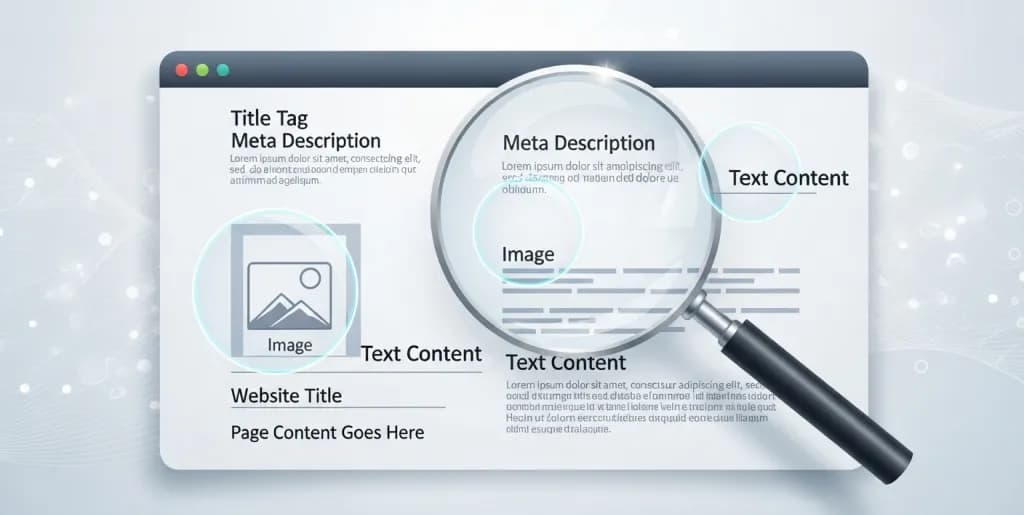
On-page SEO is the work you do directly on a page to help search engines understand it and help users get the answer they came for. That includes titles, headings, internal links, content structure, images, and the page experience signals that shape whether a page feels useful once someone lands on it.
The advantage of on-page SEO is that it is the part of SEO you control most directly. You do not have to wait for backlinks or external mentions to improve it. You can make the page clearer, easier to scan, more relevant to the target query, and more aligned with what searchers actually need.
This guide explains what on-page SEO is, which page elements matter most, and how to improve them without falling into outdated tactics like keyword stuffing or purely cosmetic rewrites.
Decoding On-Page SEO: Your Direct Path to Ranking Dominance
So, what exactly is On-Page SEO? Simply put, it refers to all the optimization efforts you make directly on your website to improve its search engine ranking and attract relevant organic traffic. Think of it as fine-tuning your content and its technical presentation so that search engines like Google can easily crawl, understand, and rank your pages.
This contrasts sharply with off-page SEO, which involves external signals like backlinks and social media mentions. With On-Page SEO, you're in complete control. You're shaping the narrative, dictating the structure, and ensuring every element on your page is working in harmony to signal relevance and quality. It’s a massive advantage because you don't rely on external factors; you build your own strength from within.
Why does this matter so much? Because Google’s algorithms are constantly evolving, becoming more sophisticated at understanding user intent and content quality. By meticulously optimizing your on-page elements, you're not just playing by the rules; you're speaking Google's language, making it easier for your content to be discovered and valued. It’s about creating a superior user experience that search engines reward.
The Foundation: Keyword Research & Intent Mastery
Before you write a single word or tweak a single tag, you need to understand what your audience is actually searching for. This isn't guesswork; it's strategic keyword research, coupled with a deep dive into user intent. This is the absolute bedrock of effective On-Page SEO.
Beyond the Single Keyword: Understanding User Intent
Gone are the days of simply stuffing a keyword into your content. Today, search engines prioritize user intent. They want to deliver results that perfectly match what a person means when they type a query, not just the words they use. Ignoring intent is a brutal mistake.
There are generally four types of user intent:
- Informational: The user wants to learn something ("how to bake sourdough," "what is On-Page SEO").
- Navigational: The user wants to go to a specific website or page ("Google Maps," "Facebook login").
- Transactional: The user wants to buy something ("buy running shoes online," "best CRM software deal").
- Commercial Investigation: The user is researching before making a purchase ("best noise-canceling headphones review," "iPhone 15 vs. Samsung S24").
You need to identify the primary intent behind your target keywords. If someone searches "what is On-Page SEO," they're looking for a comprehensive explanation, not a product to buy. Your content must deliver precisely that.
Finding Your Keywords: Tools and Tactics
Once you grasp intent, you can start unearthing the actual words and phrases your audience uses. This process involves a blend of tools and common sense.
Start with seed keywords – broad terms related to your topic. Then, expand using:
- Keyword Research Tools: Tools like Google Keyword Planner, Ahrefs, Semrush, or Ubersuggest can reveal search volumes, competition, and related terms. They're indispensable for uncovering hidden gems.
- Google Autocomplete & "People Also Ask": Type your seed keyword into Google and observe the suggestions. The "People Also Ask" box offers fantastic insights into related questions users have.
- Competitor Analysis: See what keywords your competitors are ranking for. This can reveal opportunities you might have missed.
- Long-Tail Keywords: These are longer, more specific phrases (e.g., "best budget laptop for video editing in 2024"). They often have lower search volume but higher conversion rates because they indicate very specific intent.
Observation: I once worked with a client who sold eco-friendly packaging. Initially, they focused on broad terms like "eco packaging" and struggled to rank. After a deep dive into long-tail keywords, we shifted their strategy for a key article to target phrases like "biodegradable mailer bags for small businesses" and "compostable food packaging solutions." The search volume for these individual terms was lower, yes, but the article's SERP visibility for these niche, high-intent queries dramatically improved, leading to a noticeable uptick in qualified leads. It proved that sometimes, going narrower can deliver a much bigger impact than trying to dominate overly broad, competitive terms.
Crafting Content That Converts and Ranks
With your keywords and intent firmly in mind, it’s time to create the content itself. This is where your expertise shines, where you build trust, and where you directly influence how search engines perceive your page's value.
Quality Content: The Undisputed King
Google has made it unequivocally clear: high-quality, helpful content is paramount. There's no shortcut around it. Your content needs to be:
- Comprehensive and In-Depth: Fully address the user's query. Don't leave them needing to search elsewhere for answers. If you're explaining On-Page SEO, cover all its facets.
- Original and Unique: Don't just regurgitate what others have said. Offer fresh perspectives, unique insights, or a more engaging presentation.
- Accurate and Up-to-Date: Provide factual information. Outdated statistics or incorrect advice erode trust. Regularly update your content to maintain relevance.
- Demonstrate E-E-A-T: Google's emphasis on Experience, Expertise, Authoritativeness, and Trustworthiness is massive. Show you know your stuff.
- Experience: Have you personally used the product/service or done the thing you're writing about? Share that first-hand experience.
- Expertise: Are you knowledgeable in your field? Back up claims with data or reputable sources.
- Authoritativeness: Is your website or author recognized as a go-to source for this topic?
- Trustworthiness: Is your content honest, transparent, and safe?
Strategic Keyword Placement: Not Stuffing
Once you have your high-quality content, it's about integrating your keywords naturally. "Keyword stuffing" – unnaturally forcing keywords into every sentence – is an outdated, harmful practice that will get you penalized. The goal is natural language that flows well for the reader.
Think about placing your primary keyword and related terms in these key areas:
- Introduction: Naturally introduce your main topic early on.
- Headings (H1, H2, H3): Use keywords in your headings to structure your content and signal relevance.
- Body Paragraphs: Integrate keywords where they make sense, using variations and synonyms.
- Conclusion: Summarize your main points, often reiterating the core topic.
- LSI Keywords (Latent Semantic Indexing): These are semantically related terms that help Google understand the context of your content. For "On-Page SEO," LSI keywords might include "search engine optimization," "ranking factors," "meta descriptions," or "content strategy." Use them naturally to expand topical coverage.
Content Structure: Guiding Your Readers and Bots
A well-structured article is a joy to read and easy for search engines to process. It's about creating a logical flow that guides both humans and bots through your narrative.
- Headings (H1, H2, H3, etc.): Use a clear hierarchical structure. Your article should have one H1 (the main title). Use H2s for major sections and H3s for subsections within those. This creates a logical outline.
- Short, Airy Paragraphs: Break up large blocks of text. Aim for 2-4 sentences per paragraph. This improves readability dramatically, especially on mobile devices. No one wants to read a wall of text.
- Lists: Convert enumerations or series of items into bulleted or numbered lists. They're incredibly scannable and easy to digest.
- Bolding and Italics: Use these sparingly to highlight key phrases, definitions, or important takeaways. This helps readers quickly grasp the most crucial information.
Technical On-Page Elements: The Nuts and Bolts
Beyond the content itself, there are crucial technical elements on your page that directly impact your On-Page SEO. These are the behind-the-scenes signals that search engines use to understand and categorize your content.
Title Tags: Your First Impression
The title tag (<title>) is arguably the most critical on-page element. It's the clickable headline that appears in search engine results pages (SERPs) and at the top of your browser tab.
- Optimal Length: Aim for 50-60 characters. If it's too long, Google will truncate it.
- Primary Keyword: Include your main keyword as close to the beginning as possible.
- Compelling Copy: Make it enticing! It needs to grab attention and accurately reflect your content to encourage clicks. Think about what makes you click a search result.
- Brand Name (Optional): You can include your brand name at the end, separated by a pipe (|) or hyphen (-).
A well-crafted title tag doesn't just tell Google what your page is about; it's your sales pitch to potential visitors. A strong title can massively impact your click-through rate (CTR), even if your ranking position isn't #1.
Meta Descriptions: The Sales Pitch
The meta description is the short snippet of text that appears under your title tag in the SERPs. While not a direct ranking factor, it's absolutely vital for CTR.
- Summarize Content: Briefly and accurately describe what the user will find on the page.
- Include Keywords: Naturally integrate your primary keyword and related terms. Google often bolds these in the search results, making your snippet stand out.
- Call to Action (CTA): Encourage users to click. Phrases like "Learn more," "Discover how," or "Get started" can be very effective.
- Optimal Length: Aim for around 150-160 characters. Anything longer will likely be truncated.
Think of your meta description as a mini-advertisement for your page. It needs to entice, inform, and persuade.
URL Structure: Clean and Descriptive
Your URL (Uniform Resource Locator) is the web address for your page. A clean, descriptive URL is better for both users and search engines.
- Short and Readable: Keep URLs concise and easy to understand.
- Keyword-Rich: Include your primary keyword naturally.
- Hyphens for Separation: Use hyphens (-) to separate words, not underscores (_).
- Avoid Dates/Numbers (Unless Necessary): Generally, avoid including dates or long strings of numbers unless they are crucial for the content (e.g., a specific year in a historical article).
Bad URL: www.example.com/p?id=12345&cat=2
Good URL: www.example.com/what-is-on-page-seo
Header Tags (H1-H6): Organizing Your Narrative
We touched on headings for content structure, but it's worth reiterating their technical importance. Header tags (<h1>, <h2>, <h3>, etc.) provide structure and hierarchy to your content, making it easier for search engines to understand the main topics and subtopics.
- One H1 Per Page: Your main title should be enclosed in an
<h1>tag. There should only be one<h1>per page. - Hierarchical Use: Use
<h2>tags for major sections,<h3>for subsections within<h2>sections, and so on. Don't skip levels (e.g., jump from<h2>to<h4>). - Keywords in Headings: Naturally integrate your primary and secondary keywords into your headings. This reinforces the topic's relevance to search engines.
Headers break up text, improve readability, and signal important topics, making your content more digestible for everyone.
Internal Linking: Building a Web of Authority
Internal links are hyperlinks that point to other pages within the same website. They are incredibly powerful for On-Page SEO.
- Distribute Link Equity: Internal links help spread "link juice" or authority throughout your site. If a high-authority page links to a new, relevant page, it passes some of that authority.
- Guide Users: They help users navigate your website, keeping them engaged and reducing bounce rates.
- Establish Topical Relevance: By linking related content, you show search engines the semantic relationships between your pages, reinforcing your expertise on a broader topic.
- Anchor Text: Use descriptive, keyword-rich anchor text (the clickable text of the link) that accurately reflects the content of the linked page. Avoid generic "click here."
For instance, in this article about On-Page SEO, I might link to another article on my site about "keyword research best practices" using that phrase as the anchor text.
Image Optimization: More Than Just Pretty Pictures
Images enhance user experience, but they can also be a massive SEO asset if optimized correctly.
- File Size: Compress images to reduce file size without sacrificing quality. Large images slow down your page, which is a brutal ranking factor. Tools like TinyPNG or image optimization plugins can help.
- Alt Text: Provide descriptive "alt text" for every image. This text describes the image for visually impaired users (read by screen readers) and for search engines. It's crucial for accessibility and image search SEO.
- Real Case: A small e-commerce site I consulted for had hundreds of product images with generic alt texts like "product-image-1.jpg." We implemented a strategy to update all product image alt texts to specific, descriptive phrases, such as "red leather minimalist wallet with RFID blocking" or "handmade ceramic coffee mug with speckled glaze." Within a few months, they observed a noticeable improvement in traffic coming from Google Image Search, demonstrating the direct impact of proper alt text on discoverability.
- Descriptive File Names: Name your image files descriptively before uploading them (e.g.,
on-page-seo-checklist.jpginstead ofIMG_001.jpg). - Image Sitemaps: For large sites with many images, an image sitemap can help search engines discover them.
User Experience (UX) & Core Web Vitals: Ranking for Humans
Google has increasingly emphasized user experience as a core ranking factor. If your site isn't a joy to use, it's unlikely to rank well, regardless of your content quality. This is where Core Web Vitals come into play.
Page Speed: The Need for Speed
In our fast-paced world, patience is a virtue few possess online. Slow loading times are a massive turn-off for users and a direct ranking signal for Google.
- Impact: A slow page leads to higher bounce rates (users leaving quickly) and a poorer user experience, which Google actively penalizes.
- Tools: Use VibeMarketing or Google PageSpeed Insights to analyze your page speed and get actionable recommendations.
- Factors:
- Image Compression: As mentioned, optimize image sizes.
- Browser Caching: Allow browsers to store parts of your website so it loads faster on repeat visits.
- Minify CSS/JavaScript: Remove unnecessary characters from your code to reduce file sizes.
- Reduce Server Response Time: Choose a reliable hosting provider.
Mobile-Friendliness: A Non-Negotiable
With the majority of internet users accessing content via mobile devices, having a mobile-friendly website isn't optional; it's absolutely essential. Google uses mobile-first indexing, meaning it primarily uses the mobile version of your content for indexing and ranking.
- Responsive Design: Your website should adapt seamlessly to any screen size, from desktops to tablets to smartphones.
- Touch Targets: Ensure buttons and links are large enough and spaced far enough apart to be easily tapped on a mobile screen.
- Readable Fonts: Use font sizes that are easy to read without zooming on mobile devices.
- Google's Mobile-Friendly Test: Use this tool to check if your pages pass Google's mobile-friendliness criteria.
Readability and Engagement: Keeping Users Hooked
Beyond technical speed, the actual experience of consuming your content is crucial. Google tracks user engagement signals, which indirectly influence rankings.
- Time on Page: How long do users stay on your page? Longer times suggest valuable content.
- Bounce Rate: What percentage of users leave your site after viewing only one page? A high bounce rate can signal poor relevance or UX.
- Scroll Depth: How far down the page do users scroll? Deep scrolls indicate engagement.
- Clear Calls to Action: Guide users on what to do next, whether it's reading another article, signing up for a newsletter, or making a purchase.
- Interactive Elements: Consider quizzes, polls, or embedded videos to boost engagement.
Advanced On-Page SEO Tactics: Elevating Your Game
Once you've nailed the fundamentals, these advanced tactics can give you an extra edge, helping your content stand out even more.
Schema Markup: Speaking Google's Language
Schema markup (also known as structured data) is a vocabulary of tags you can add to your HTML to help search engines better understand the content on your pages. It doesn't directly impact rankings, but it can lead to "rich snippets" in the SERPs, which dramatically improve visibility and CTR.
- What it Does: It tells Google specific details about your content, such as whether it's a recipe, a product, an article, an event, or an FAQ.
- Rich Snippets: These are enhanced search results that display extra information directly in the SERP, like star ratings, product prices, or FAQ toggles.
- Types of Schema: Common types include Article, Product, Review, FAQPage, HowTo, LocalBusiness, and Organization.
- Implementation: You typically add schema using JSON-LD code within the
<head>or<body>of your page. Google's Structured Data Testing Tool can help you validate your markup.
Implementing schema is like giving Google a direct, unambiguous summary of your content's key entities. It's a powerful way to enhance your presence in search results.
E-E-A-T: Demonstrating Your Authority
We touched on E-E-A-T (Experience, Expertise, Authoritativeness, Trustworthiness) earlier, but it's so fundamental to content quality that it deserves a deeper look as an advanced On-Page SEO strategy. It’s particularly vital for YMYL (Your Money Your Life) topics like health or finance, where inaccurate information can cause harm.
How do you signal E-E-A-T through your on-page elements?
- Author Bios: Include detailed, credible author bios for every piece of content, highlighting their experience and qualifications.
- Citations and References: For factual claims, link to authoritative, primary sources. This builds trust and demonstrates thorough research.
- About Us Page: Have a robust "About Us" page that clearly outlines your organization's mission, values, and the expertise of your team.
- Contact Information: Make it easy for users to contact you. This builds trust.
- Testimonials and Reviews: If applicable, showcase positive feedback to demonstrate trustworthiness.
- Transparency: Be upfront about any affiliations or sponsored content.
Building E-E-A-T is an ongoing process that requires consistent effort to produce high-quality, trustworthy content from credible sources. It's about earning Google's trust, and by extension, your audience's.
Content Updates and Refresh: Staying Relevant
SEO isn't a "set it and forget it" game. Content gets stale, information becomes outdated, and competitors emerge. Regularly updating and refreshing your existing content is a powerful On-Page SEO tactic.
- Why Update?
- Maintain Freshness: Google favors fresh, relevant content.
- Improve Accuracy: Update statistics, facts, and examples.
- Enhance Comprehensiveness: Add new sections, answer new questions, or expand on existing points.
- Boost Rankings: Often, a significant content refresh can lead to a noticeable jump in rankings for existing pages.
- What to Update:
- Review old articles for outdated information.
- Add new keywords or expand on related topics.
- Improve readability and structure.
- Update internal links.
- Add new images or multimedia.
I've seen articles that were stagnant for months suddenly surge in rankings after a thorough refresh, proving that Google values ongoing commitment to quality.
Common On-Page SEO Pitfalls to Avoid
Even with the best intentions, it's easy to fall into common traps. Steering clear of these pitfalls is just as important as implementing best practices.
- Keyword Stuffing: Over-optimizing by unnaturally repeating keywords. This will hurt your rankings, not help them. Focus on natural language.
- Thin Content: Pages with very little valuable information. Google wants comprehensive answers, not superficial snippets.
- Ignoring Mobile Users: Not having a responsive, mobile-friendly design is a critical error in today's mobile-first world.
- Slow Page Load Times: Users and search engines demand speed. Don't let large images, unoptimized code, or poor hosting drag you down.
- Duplicate Content Issues: Having identical or near-identical content on multiple pages within your site can confuse search engines and dilute your SEO efforts. Use canonical tags if necessary.
- Poor Internal Linking: A lack of internal links or using generic anchor text misses a huge opportunity to boost your site's authority and user navigation.
- Skipping Alt Text for Images: This hurts accessibility and means you're missing out on image search traffic.
Implementing Your On-Page SEO Strategy: A Mini-Checklist
Ready to put this into action? Use this quick checklist to guide your On-Page SEO efforts:
- Keyword & Intent Research: Thoroughly understand what your audience searches for and why.
- Compelling Title Tags: Craft unique, keyword-rich, and clickable titles (50-60 chars).
- Enticing Meta Descriptions: Write persuasive snippets with a CTA (150-160 chars).
- Clean URLs: Ensure they are short, descriptive, and keyword-friendly.
- Content Structure: Use H1 for the main title, H2s for major sections, and H3s for subsections.
- High-Quality Content: Create comprehensive, original, and E-E-A-T-rich content.
- Natural Keyword Integration: Weave keywords and LSI terms naturally throughout your content.
- Image Optimization: Compress images, use descriptive file names, and write informative alt text.
- Strategic Internal Linking: Link to relevant pages within your site using descriptive anchor text.
- Page Speed & Mobile-Friendliness: Ensure your site loads quickly and looks great on all devices.
- Schema Markup (Advanced): Consider adding structured data for rich snippets where appropriate.
- Regular Content Updates: Keep your content fresh, accurate, and comprehensive.
Conclusion: Your On-Page SEO Journey Starts Now
On-Page SEO isn't just a technical task; it's a holistic approach to making your web content as valuable, accessible, and understandable as possible for both search engines and human users. It’s about leveraging every element on your page to signal relevance, authority, and quality.
The massive advantage here is the direct control you have. You don't need to wait for others; you can start optimizing today. By focusing on user intent, crafting exceptional content, and meticulously fine-tuning your on-page elements, you're building a robust foundation for sustainable organic growth. This isn't a one-time fix, but an ongoing, iterative process. Embrace it, and watch your visibility soar.
Quick takeaways
- On-page SEO is not just keyword placement. It is query match, page structure, clarity, and user experience working together.
- The most important elements are title tags, headings, useful content, internal links, image handling, and page experience.
- If a page does not satisfy intent clearly, small metadata tweaks rarely fix the ranking problem.
Frequently Asked Questions (FAQ)
Q1: What's the main difference between On-Page and Off-Page SEO?
On-Page SEO involves optimizing elements on your website (content, titles, images), while Off-Page SEO focuses on external signals like backlinks from other sites. You have direct control over On-Page SEO.
Q2: Is keyword density still important for On-Page SEO?
No, focusing on a specific keyword density percentage is an outdated and harmful practice. Instead, concentrate on natural language, integrating keywords and related terms contextually, and writing for user intent.
Q3: Can On-Page SEO help my local business?
Absolutely! Beyond general On-Page SEO, local businesses should optimize for local keywords, include their address and phone number on relevant pages, and consider LocalBusiness schema markup to appear in local search results.
References
- Google Search Central: SEO Starter Guide
- Google Search Central: Creating Helpful, Reliable, People-First Content