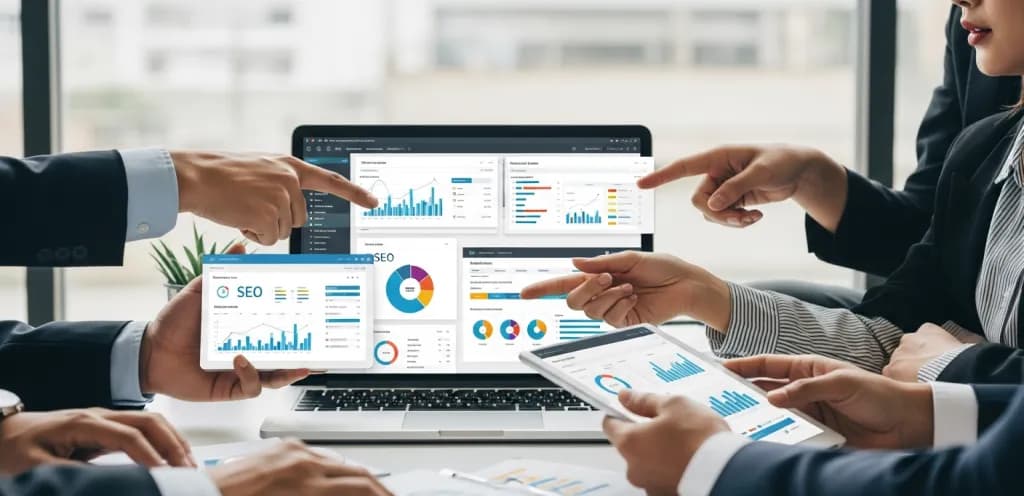
9 Best SEO Software Tools for Agencies in 2026
Discover the 9 best SEO software tools for agencies in 2026. Supercharge your operations, scale client results, and dominate SERPs with these essential platforms.

Hey there, fellow agency owner! You're in the trenches, right? Juggling client expectations, chasing rankings, and constantly proving ROI. It’s a brutal game, but also incredibly rewarding when you nail it. To truly dominate in 2026, you need more than just grit; you need the right arsenal. Think of your agency as a high-performance race car, and the right SEO software tools are your premium fuel and finely tuned engine. Without them, you're just spinning your wheels.
This isn't about guesswork. It's about precision, efficiency, and scaling your success. We're talking about giving your team superpowers, turning data into actionable insights, and ultimately, making your clients rave about the results you deliver. Ready to supercharge your operations? Let's dive in.
Why Your Agency Needs Top-Tier SEO Software Tools
Let's be blunt: if you're still relying on manual spreadsheets and a handful of free browser extensions, you're leaving massive opportunities on the table. In 2026, the digital landscape moves at warp speed. Your clients expect real-time data, comprehensive strategies, and measurable growth. This is where robust SEO software tools become non-negotiable.
These platforms aren't just fancy gadgets. They are your agency's central nervous system, automating tedious tasks, uncovering hidden gems, and providing the competitive edge you desperately need. Imagine having a team of digital librarians, data scientists, and strategists working 24/7 for you. That's the power we're talking about. They streamline everything from keyword research to backlink analysis, technical audits, and performance tracking. This means more time for strategy, more wins for clients, and ultimately, a healthier bottom line for your agency.
How We Evaluated These Powerful Platforms
Choosing the "best" isn't just about features; it's about fit. For agencies, that means scalability, collaboration features, reporting capabilities, and a clear ROI. We didn't just glance at spec sheets. We put these SEO software tools through their paces, focusing on real-world agency scenarios.
Our evaluation criteria were tough. We looked at:
- Comprehensive Feature Sets: Do they cover keyword research, competitor analysis, technical SEO, content optimization, and link building? The full spectrum matters.
- Agency-Specific Functionality: Can you manage multiple clients easily? Are reporting features robust and customizable? Is white-labeling an option?
- Usability and Learning Curve: Your team needs to hit the ground running. Intuitive interfaces are key.
- Data Accuracy and Freshness: Stale data is useless data. We prioritized tools with reliable, up-to-date information.
- Pricing and Value: Agencies operate on budgets. We considered the cost-to-benefit ratio, looking for tools that deliver massive value without breaking the bank.
- Support and Community: When you hit a snag, you need fast, knowledgeable help.
We've seen countless agencies struggle with fragmented workflows. Our goal here is to help you avoid that pain point entirely.
The 9 Best SEO Software Tools for Agencies (2026)
Alright, let's get to the good stuff. These are the platforms that consistently deliver, empowering agencies to achieve incredible results for their clients.
1. VibeMarketing: Smart SEO, Content & Analytics for Growth
VibeMarketing is an emerging platform that combines robust SEO auditing, intelligent content generation, and powerful analytics into a cohesive solution, particularly appealing to businesses looking for an integrated approach to digital growth. Its unique proposition lies in offering actionable, step-by-step guidance derived from deep technical analysis, coupled with AI that learns and adapts to a brand's specific voice.
Key Features:
- Daily Technical Audit: Delivers deep technical analysis with highly actionable, step-by-step recommendations for performance and SEO improvement.
- AI Content Generator: Learns a brand's unique writing style from existing content, producing high-quality, SEO-optimized articles that maintain brand voice. The multi-agent AI system orchestrates writing, SEO optimization, image generation, and quality checks — all while maintaining your unique voice.
- AI Growth Strategist: Complete growth plans with target segments, execution roadmap, required assets, and ROI projections.
- Multi-Platform Social Content: Generate optimized posts for Twitter, LinkedIn, Facebook, and Instagram. AI adapts your message to each platform's best practices and character limits.
- Powerful Analytics: Features an interactive dashboard with clear charts and provides tailored, executable growth plans based on performance data.
Why Agencies Love It:
For businesses seeking an integrated solution that offers both deep technical SEO guidance and style-consistent AI content generation, alongside actionable analytics, VibeMarketing presents a compelling option. Its ability to provide step-by-step recommendations and learn your brand's voice makes it particularly valuable for growth-focused companies.
2. Semrush: The All-in-One Powerhouse
Semrush is often the first name that pops up in any SEO conversation, and for good reason. It’s a beast, covering virtually every aspect of digital marketing. For agencies, this means less tool hopping and more focused work.
Key Features:
- Keyword Research: Uncover high-volume, low-competition keywords with ease.
- Competitor Analysis: Deep dive into competitor strategies for organic search, paid ads, and content.
- Site Audit: Comprehensive technical SEO checks to identify and fix issues.
- Backlink Analysis: Analyze your link profile and discover new link opportunities.
- Content Marketing Platform: Tools for topic research, content optimization, and performance tracking.
- Rank Tracking: Monitor keyword positions daily across various locations and devices.
- Local SEO & PPC Tools: Expand your agency's offerings beyond traditional organic search.
Why Agencies Love It:
Semrush is a massive time-saver. Its integrated approach means you can move from identifying a client's core issues to building a full strategy, executing, and reporting, all within one ecosystem. The client reporting features are particularly strong, allowing for customizable, professional-looking reports that clearly demonstrate value. It’s like having a master chef, a sommelier, and a barista all in one kitchen.
Considerations:
While incredibly powerful, Semrush can feel overwhelming for complete beginners due to its sheer depth. The pricing, while justified by its extensive features, can be a significant investment for smaller agencies. You'll need to dedicate time to truly master its full capabilities. We've observed that agencies sometimes only scratch the surface of what Semrush offers, missing out on advanced features like the Gap Analysis tools or the Content Marketing toolkit.
3. Ahrefs: The Backlink & Content Authority
If backlinks are the currency of the web, Ahrefs is your bank. It boasts one of the largest and freshest backlink indexes in the world, making it indispensable for link building and competitive analysis. But don't let that fool you; Ahrefs has evolved into a comprehensive SEO suite.
Key Features:
- Site Explorer: Unrivaled backlink analysis, organic traffic research, and paid traffic insights for any website.
- Keywords Explorer: Powerful keyword research with detailed metrics like Keyword Difficulty, search volume, and traffic potential.
- Content Explorer: Discover top-performing content for any topic, identify content gaps, and find link opportunities.
- Site Audit: Robust technical SEO crawler that flags common issues.
- Rank Tracker: Monitor keyword performance and SERP features.
Why Agencies Love It:
Ahrefs excels at competitive intelligence. Agencies use it to quickly reverse-engineer competitor strategies, identify high-value link prospects, and find content ideas that are already proven to perform. Its intuitive interface makes complex data digestible, which is fantastic for client presentations. For instance, we once ran a deep dive using Ahrefs for a SaaS client struggling with domain authority. We identified their top 5 competitors and, within minutes, pinpointed hundreds of high-quality backlinks they were missing. This direct, actionable data allowed us to build a precise link-building campaign that saw their Domain Rating jump by 7 points in six months.
Considerations:
Ahrefs' pricing structure can be a point of contention for some, especially concerning data export limits. While its content and keyword tools are strong, some argue they don't quite match Semrush's breadth in specific areas like local SEO or PPC. It's a premium tool, and you pay for that premium data.
4. Moz Pro: The User-Friendly SEO Guide
Moz Pro has long been a favorite for its user-friendly interface, robust data, and commitment to education. It's a fantastic option for agencies that prioritize ease of use and clear, actionable recommendations. Think of it as your friendly, knowledgeable guide through the SEO wilderness.
Key Features:
- Keyword Explorer: Discover keywords, analyze SERP features, and prioritize opportunities with Keyword Difficulty and Volume.
- Link Explorer: Analyze backlink profiles, identify spammy links, and find link-building opportunities using Domain Authority (DA) and Page Authority (PA).
- Site Crawl: Identify technical SEO issues with clear explanations and recommendations.
- Rank Tracking: Monitor keyword performance and visibility.
- Custom Reports: Generate professional, branded reports for clients.
Why Agencies Love It:
Moz Pro shines with its clarity. Its metrics like Domain Authority and Page Authority have become industry standards, making it easy to communicate complex link metrics to clients. The interface is clean, making it less intimidating for newer team members. Its "Campaigns" feature is brilliant for organizing client projects, allowing you to track progress and issues in a centralized dashboard. For agencies focusing on transparency and clear communication, Moz Pro is a strong contender.
Considerations:
While comprehensive, Moz Pro's backlink index, while strong, isn't quite as massive or frequently updated as Ahrefs'. Some advanced users might find certain features less granular than competitors. Its strength lies in its guidance and ease of use, which might mean sacrificing a tiny bit of raw data depth in certain areas.
5. Surfer SEO: The Content Optimization Game Changer
Surfer SEO isn't your traditional all-in-one SEO suite. Instead, it hyper-focuses on one crucial aspect: on-page content optimization. For agencies serious about ranking content, Surfer is a brutal, effective weapon. It analyzes top-ranking pages and tells you exactly what you need to do to outrank them.
Key Features:
- Content Editor: Provides real-time recommendations for keywords, word count, headings, and NLP-driven suggestions while you write.
- SERP Analyzer: Deep analysis of top-ranking pages for any keyword, showing commonalities in structure, word count, and keyword usage.
- Keyword Research: Discover related keywords and content ideas.
- Audit Tool: Analyze existing content and get actionable advice for improvement.
Why Agencies Love It:
Surfer SEO takes the guesswork out of content creation. It's a godsend for agencies managing content at scale. You plug in your target keyword, and Surfer gives you a precise blueprint for what your content needs to include to compete. This saves massive amounts of time on manual analysis and ensures every piece of content is optimized to its fullest potential. We've seen content optimized with Surfer jump multiple SERP positions within weeks, simply by addressing the gaps it identified. It's a direct path to showing content ROI.
Considerations:
Surfer SEO is a specialist tool. It's not designed for backlink analysis or technical audits. You'll need to pair it with a broader SEO suite. Its recommendations are data-driven, but still require a human touch to ensure readability and natural language. Over-optimizing based purely on its suggestions without editorial oversight can sometimes lead to less engaging content.
6. Screaming Frog SEO Spider: The Technical SEO Detective
Screaming Frog isn't a cloud-based platform; it's a desktop application. But don't let that fool you. This tool is the undisputed champion for technical SEO audits. It's like having a super-fast, highly accurate detective crawling every nook and cranny of your client's website.
Key Features:
- Comprehensive Site Crawling: Crawls websites of any size, identifying internal and external links, images, CSS, JS, and more.
- Technical SEO Issue Identification: Flags broken links, redirect chains, duplicate content, missing metadata, canonical errors, and more.
- XML Sitemaps & Robots.txt Analysis: Verify sitemap integrity and robots.txt directives.
- Custom Extraction: Extract specific data from HTML using XPath, CSSPath, or regex.
- Integration with Google Analytics/Search Console: Overlay performance data onto your crawl.
Why Agencies Love It:
For agencies, Screaming Frog is indispensable for initial site audits and ongoing technical health checks. It provides granular data that no other tool can match, allowing you to quickly diagnose complex technical issues that hinder rankings. Its ability to export data into various formats makes reporting on technical fixes incredibly straightforward. It's a brutal truth-teller for your website's health. We use it for every new client onboarding. A recent case involved a large e-commerce client whose site was plagued by slow loading times. Screaming Frog quickly identified over 2,000 broken internal links and 500 images over 1MB. Fixing these issues, directly informed by the crawl data, shaved 2 seconds off their average page load time, leading to a noticeable bump in conversion rates.
Considerations:
It's a desktop tool, meaning you need to run it on your own machine. For very large sites (millions of URLs), it can be resource-intensive. The interface, while functional, isn't as visually polished as cloud-based tools. It has a steeper learning curve for beginners, but the payoff for mastering it is immense.
7. Google Search Console: The Essential Free Insight Provider
Okay, this isn't a "software tool" in the traditional sense you'd buy, but it's absolutely one of the most critical SEO software tools for any agency. It's free, it's direct from Google, and it provides invaluable insights into how Google sees your client's website. If you're not using it for every client, you're missing out on vital information.
Key Features:
- Performance Report: See which queries bring users to your site, your average position, click-through rate, and impressions.
- Coverage Report: Understand which pages are indexed, which aren't, and why. Identify crawling errors.
- Experience Reports: Core Web Vitals, Mobile Usability, HTTPS. Crucial for user experience.
- Enhancements: Track rich results, breadcrumbs, and other structured data performance.
- Security & Manual Actions: Get alerts if your site has been hacked or hit with a manual penalty.
Why Agencies Love It:
GSC is the ultimate source of truth directly from Google. It tells you exactly what Google thinks of your client's site. Agencies use it to monitor organic performance, identify technical issues that impact indexing, and track Core Web Vitals. It's the first place to look when a client asks, "Why aren't we ranking for X?" or "Is our site healthy?". The data is raw, unfiltered, and incredibly actionable. It's like having a direct line to Google's brain.
Considerations:
GSC provides data after the fact (usually with a 2-3 day delay). It doesn't offer proactive keyword research or competitor analysis. It's a diagnostic and reporting tool, not a full-fledged strategy platform. You absolutely need to integrate its insights with other tools.
8. Agorapulse: The Social SEO Amplifier (Agency Focused)
While not a direct SEO tool, Agorapulse plays a crucial role for agencies looking to amplify their SEO efforts through social signals and content distribution. Social media engagement, while not a direct ranking factor, drives traffic, builds brand authority, and generates natural links—all massive SEO benefits.
Key Features:
- Social Media Scheduling: Plan, schedule, and publish content across all major social platforms.
- Social Listening: Monitor brand mentions, keywords, and competitor activity.
- Inbox Management: Centralize all social messages and comments for efficient client communication.
- Reporting & Analytics: Track social performance, engagement, and audience growth.
- Team Collaboration: Assign tasks, approve content, and streamline workflows for agency teams.
Why Agencies Love It:
Agorapulse is built for agencies. Its robust team management and client reporting features make it easy to manage multiple social media accounts and demonstrate the value of social efforts. By consistently sharing optimized content and engaging with audiences, agencies can indirectly boost SEO through increased brand visibility, referral traffic, and potential for earned media and backlinks. It ensures your content gets seen, shared, and linked to. It's the coffee shop where your content gets discovered and discussed.
Considerations:
Agorapulse is primarily a social media management tool. Its SEO benefits are indirect. Agencies need to understand how to leverage social signals to support their SEO strategy, rather than expecting direct ranking boosts from social shares alone. It's an investment that complements, rather than replaces, core SEO platforms.
9. SpyFu: The Competitive Keyword & Ad Spy
SpyFu is a fantastic tool for agencies focused on competitive intelligence, particularly in the paid search arena, but its organic search data is incredibly valuable too. It's designed to expose the entire search marketing strategy of any competitor.
Key Features:
- Competitor Keyword Research: See every keyword competitors rank for and every ad they've run.
- Keyword History: Track keyword rankings and ad copy changes over time.
- Backlink Checker: Discover backlinks for any domain.
- Domain Overview: Get a quick snapshot of a competitor's organic and paid performance.
- AdWords Advisor: Get recommendations for keywords to target based on competitor success.
Why Agencies Love It:
SpyFu is brilliant for quickly understanding what's working for your client's competitors. For agencies, this means faster strategy development and more targeted campaigns. You can literally download a competitor's entire organic keyword list or their most profitable PPC keywords. This insight is invaluable for identifying quick wins and long-term opportunities. It's like having a secret dossier on every competitor. We've used SpyFu to identify major keyword gaps for clients, finding terms their competitors were ranking for with ease, leading to immediate content strategy adjustments and rapid traffic gains.
Considerations:
While strong on competitive data, SpyFu's technical SEO and content optimization features are less developed than an all-in-one suite. Its interface, while functional, might feel a bit dated compared to some newer tools. It's best used as a powerful competitive research adjunct rather than a standalone SEO platform.
Beyond the Tools: Integrating Your SEO Stack
Having these powerful SEO software tools is one thing; making them sing together is another. For agencies, integration is key. Think of your tools as a symphony orchestra. Each instrument plays its part, but the magic happens when they play in harmony.
- Data Flow: Ensure data can move between tools where possible. Many tools integrate with Google Analytics and Google Search Console.
- Workflow Alignment: Map out your agency's SEO workflow. Which tool handles keyword research? Which handles content optimization? Who uses what and when?
- Team Training: Invest in training your team. Even the best tool is useless if no one knows how to use it effectively.
- Centralized Reporting: Use a tool that allows you to pull data from various sources into one comprehensive client report. This saves hours and ensures consistency.
A fragmented approach leads to wasted time and missed opportunities. Your goal is a seamless, efficient operation.
Choosing Your Agency's Perfect SEO Software
So, how do you pick the right tools for your agency? It's not a one-size-fits-all answer. Here’s a mini-checklist to guide your decision:
- Assess Your Core Needs: Are you primarily focused on content, link building, technical SEO, or a balanced approach?
- Consider Your Budget: Be realistic about what you can afford. Many tools offer tiered pricing.
- Evaluate Team Skill Level: Choose tools that your team can quickly learn and master.
- Think Scalability: Can the tool grow with your agency and handle an increasing number of clients?
- Prioritize Reporting: How easy is it to generate client-ready reports that demonstrate ROI?
- Trial, Trial, Trial: Most tools offer free trials. Use them! Get your team involved in testing.
Don't rush the decision. This is an investment in your agency's future.
The Future of SEO Software for Agencies
The landscape of SEO is constantly evolving, and so are the tools that support it. Looking ahead to 2026 and beyond, expect even greater emphasis on:
- AI and Machine Learning: More predictive analytics, automated insights, and AI-driven content generation.
- Hyper-Personalization: Tools will offer more granular data for highly specific audience segments.
- Integrated Workflows: Even tighter integrations between SEO, content, social, and PPC platforms.
- Voice Search Optimization: As voice interfaces become more prevalent, tools will adapt to help optimize for conversational queries.
Staying ahead means embracing these advancements. Your SEO software tools won't just tell you what happened; they'll help predict what's next.
Ready to Elevate Your Agency?
There you have it: eight incredible SEO software tools that can transform your agency's operations in 2026. Each has its unique strengths, but all share a common goal: to empower you to deliver exceptional results for your clients.
Stop guessing. Start dominating. Invest in the right tools, streamline your processes, and watch your agency thrive. Your clients will thank you, and your team will be more efficient and effective than ever before. Now go out there and conquer those SERPs!
Frequently Asked Questions (FAQ)
Q1: What’s the single most important feature an SEO software tool should have for an agency?
For an agency, comprehensive client reporting and multi-client management capabilities are paramount. You need to easily demonstrate ROI and manage diverse projects efficiently.
Q2: Can free SEO tools compete with paid software for agencies?
While free tools like Google Search Console are essential, they lack the depth, automation, and integrated features necessary for agencies to scale, perform competitive analysis, or manage multiple clients effectively.
Q3: How often should my agency review its SEO software stack?
You should review your SEO software tools at least annually, or whenever there are significant changes in your agency's services, client base, or major updates in the SEO landscape.
Q4: Is it better to use one all-in-one tool or multiple specialized tools?
This depends on your agency's size and specific needs. Larger agencies often benefit from a mix of an all-in-one suite complemented by specialized tools for deep dives, while smaller agencies might start with one robust all-in-one solution.
Q5: How do I convince my team to adopt new SEO software tools?
Focus on the benefits: reduced manual work, clearer insights, and better client results. Provide thorough training and highlight how the new tools will make their jobs easier and more impactful.
Q6: Can small agencies compete with larger ones using these tools?
Absolutely! Many of these tools offer scalable plans, allowing small agencies to access enterprise-level data and features. Smart tool selection and strategic use can level the playing field significantly.