
9 Types of Content for Content Marketing in 2026
Learn which content formats are most useful for content marketing and when each one fits your goals.
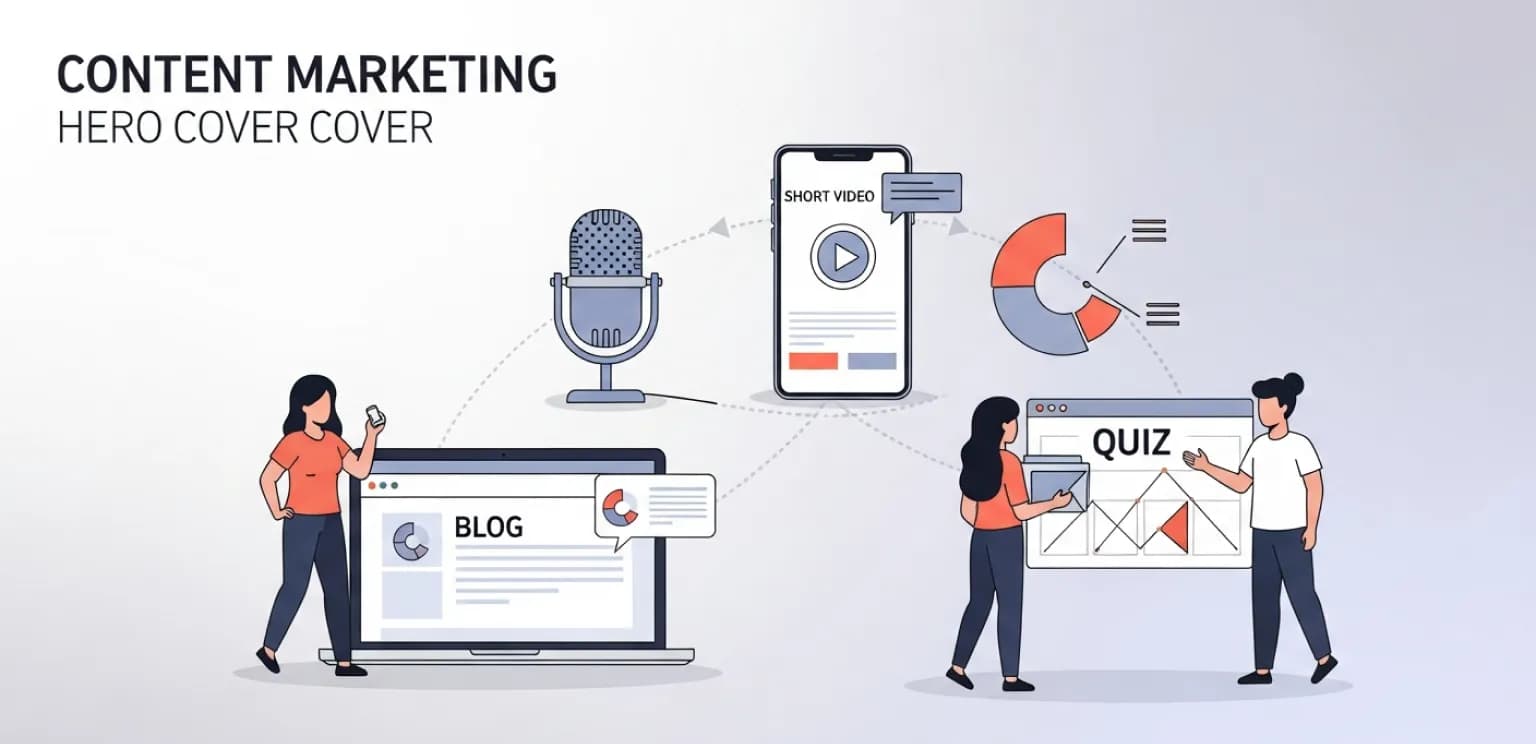
The best types of content for content marketing depend on audience intent and distribution reality, not on trend lists. Most teams need a mix of evergreen reference pages, short-form distribution content, proof assets, and conversion-focused formats.
The goal is not to publish every format. It is to choose the formats that match your sales cycle, internal resources, and how your audience actually consumes information.
This guide breaks down the main content types worth using and when each one is most useful.
Understanding the Core Types of Content for Content Marketing in 2026
Forget generic advice. The game has changed. Google's Search Essentials are crystal clear: helpful, reliable, people-first content wins. This isn't about gaming algorithms; it's about genuinely serving your audience. Your content isn't just information; it's an experience, a solution, a trusted guide.
Mastering the right types of content for content marketing in 2026 means understanding intent, platform, and impact. It means being a librarian, a storyteller, and a problem-solver all rolled into one. You're not just publishing; you're building relationships, one valuable piece of content at a time. This isn't optional; it's your competitive edge.
The 9 Essential Types of Content You Need to Dominate in 2026
Ready to build an unstoppable content engine? These nine content types are your blueprint. Each one serves a distinct purpose, driving engagement, authority, and conversions. Let's break them down.
1. Pillar Pages & Evergreen Guides: Your Foundational Library
Think of pillar pages and evergreen guides as the sturdy, well-organized shelves in your content library. These are your deep dives, your ultimate resources, the definitive answers to your audience's biggest questions. They're comprehensive, authoritative, and designed to stay relevant for years.
These aren't quick reads. They're exhaustive explorations of a core topic, linking out to related, more specific articles (cluster content) that you've also created. They establish you as the go-to expert. Google loves them because they demonstrate massive topical authority. Your audience loves them because they get everything they need in one place.
Why they're essential:
- SEO Powerhouse: They signal deep expertise to search engines, boosting your rankings for broad, high-value keywords.
- Audience Trust: Position you as the ultimate authority, building massive credibility.
- Lead Generation: Excellent for capturing leads through gated content or strategic calls to action.
Actionable Tips:
- Go Big: Aim for 3,000+ words. Don't skimp on detail.
- Structure is Key: Use clear headings, subheadings, tables of contents, and internal links. Make it scannable, even if it's long.
- Update Regularly: Keep the information fresh. An "ultimate guide" from 2022 won't cut it in 2026 without a refresh.
2. Short-Form Vertical Video: The Engagement Powerhouse
If pillar pages are your library, short-form vertical video is the espresso shot of your content strategy. It's fast, punchy, and designed for instant impact on mobile devices. Think TikTok, Instagram Reels, YouTube Shorts – these platforms are brutal for attention, but massive for reach.
This isn't about polished, high-budget productions. It's about authenticity, quick value, and relatable moments. Show a quick tutorial, share a rapid-fire tip, reveal a behind-the-scenes glimpse, or react to a trend. The goal is to hook viewers in seconds and deliver a digestible piece of information or entertainment.
Why they're essential:
- Massive Reach: Algorithms push engaging short video, putting your content in front of new audiences.
- High Engagement: People scroll, but they stop for compelling short video.
- Brand Personality: A fantastic way to show the human side of your brand.
Actionable Tips:
- Hook Immediately: The first 1-3 seconds are critical. Use a strong visual, a bold statement, or a question.
- Keep it Concise: Get to the point. Most successful videos are under 60 seconds.
- Add Value: Even in short bursts, provide a tip, a laugh, or a fresh perspective.
- Embrace Trends: Jump on trending sounds or formats, but always make them relevant to your niche.
First-hand observation: We observed a brutal truth: a 60-second tutorial on TikTok often outperformed a 5-minute YouTube video for initial engagement. Our team started repurposing longer content into bite-sized, rapid-fire tips. The analytics showed a clear spike in traffic from these platforms, even if the conversion happened later on our main site. It's all about meeting your audience where they are and delivering value in their preferred format.
3. Interactive Content Experiences: Engage, Learn, Convert
Interactive content isn't just a trend; it's a fundamental shift in how people consume information. Quizzes, calculators, polls, assessments, interactive infographics – these aren't passive reads. They demand participation, turning your audience from spectators into active players.
This type of content is incredibly powerful for several reasons. It's inherently engaging, making learning fun and memorable. It provides immediate value to the user, often giving them personalized insights. Crucially, it's a goldmine for data collection, helping you understand your audience better and segment them for future marketing efforts.
Why they're essential:
- Deep Engagement: Users spend more time actively interacting with your brand.
- Personalized Value: Offers tailored insights or recommendations, making the experience highly relevant.
- Lead Qualification: Excellent for gathering valuable user data and qualifying leads.
Actionable Tips:
- Define Your Goal: What do you want to achieve? Lead gen, education, product recommendation?
- Keep it Simple: Don't overcomplicate the interaction. Smooth UX is paramount.
- Offer Real Value: The results of a quiz or calculator should provide actionable insights.
Real Case: We ran a test with a simple quiz on our site. It wasn't fancy, just 5 questions about common tech issues. The result? A 30% jump in qualified leads compared to our standard lead magnet. The key was asking relevant questions that segmented users immediately, allowing us to follow up with highly targeted solutions. This wasn't just lead capture; it was lead understanding.
4. Podcast & Audio Content: The Commute Companion
In a world where everyone is multitasking, audio content is your secret weapon. Podcasts, audio articles, voice search optimized content – these formats fit seamlessly into commutes, workouts, and chores. They offer convenience and accessibility that visual content simply can't match.
Podcasts allow for deeper conversations, interviews with experts, and a more intimate connection with your audience. Audio articles leverage your existing blog content, giving it a new life and reaching people who prefer listening over reading. Voice search optimization ensures your content is found when users ask their smart devices questions.
Why they're essential:
- Accessibility: Reaches audiences who are on the go or prefer audio consumption.
- Deep Connection: The human voice builds intimacy and trust.
- Niche Building: Perfect for diving into specific topics and building a dedicated community.
Actionable Tips:
- Focus on Niche: Find a specific angle or problem your podcast can solve.
- Quality Audio: Invest in a decent microphone. Poor audio is a brutal barrier.
- Repurpose: Turn blog posts into audio articles. Transcribe podcasts into blog posts. Maximize your efforts.
- Optimize for Voice Search: Structure your content to answer common questions directly and concisely.
5. Original Research & Data Studies: Be the Source, Not Just a Speaker
Want to be seen as a true thought leader? Stop quoting others and start generating your own insights. Original research, industry reports, and data studies are massive authority builders. When you're the source of new, verifiable information, you become indispensable.
This content type is a magnet for backlinks, media mentions, and industry recognition. It demonstrates expertise, provides unique value, and positions your brand at the forefront of your field. It's hard work, no doubt, but the payoff in credibility and organic reach is immense.
Why they're essential:
- Unrivaled Authority: Establishes your brand as a primary source of information.
- Link Magnet: Other sites will naturally link to your original data, boosting your SEO.
- Media Coverage: Journalists and industry influencers will cite your findings.
Actionable Tips:
- Identify a Gap: What questions in your industry lack clear, data-backed answers?
- Methodology Matters: Be transparent about your research methods. Credibility is everything.
- Visualize Data: Use infographics, charts, and graphs to make complex data digestible and shareable.
- Promote Heavily: Once published, push your findings across all channels.
6. User-Generated Content (UGC) & Testimonials: The Authenticity Amplifier
In an age of skepticism, authenticity is gold. User-Generated Content (UGC) and testimonials are your most powerful tools for building trust. This isn't your marketing team talking; it's your actual customers, sharing their real experiences.
UGC can take many forms: customer reviews, photos or videos of them using your product, social media posts mentioning your brand, case studies, or even forum discussions. Testimonials are direct endorsements. Both are incredibly persuasive because they come from a trusted, unbiased source – your peers.
Why they're essential:
- Builds Trust: People trust other people more than brands. Period.
- Social Proof: Shows potential customers that others are already enjoying your product/service.
- Cost-Effective: Often free or low-cost content that comes directly from your community.
Actionable Tips:
- Encourage & Incentivize: Ask for reviews, run contests for photo submissions, or offer small rewards.
- Showcase Prominently: Feature UGC on your website, social media, and product pages.
- Respond & Engage: Acknowledge and appreciate users who create content for you.
- Ask for Specifics: For testimonials, ask customers to highlight specific benefits or problems solved.
7. Personalized Content Journeys: The Tailored Experience
Generic content is quickly becoming obsolete. In 2026, your audience expects content that speaks directly to them. Personalized content journeys leverage data to deliver highly relevant content at every stage of the customer lifecycle.
This means dynamic website content that changes based on user behavior, email campaigns segmented by interest, product recommendations tailored to past purchases, or even interactive experiences that adapt as the user progresses. It's about moving beyond one-size-fits-all and creating a truly bespoke experience.
Why they're essential:
- Higher Engagement: Users are more likely to interact with content relevant to their specific needs.
- Improved Conversions: Tailored content guides users more effectively towards desired actions.
- Stronger Relationships: Shows you understand and value your individual customers.
Actionable Tips:
- Segment Your Audience: Use demographics, behavior, and interests to group users.
- Map Customer Journeys: Understand the different paths users take and where personalized content can intervene.
- Leverage Technology: Use CRM, marketing automation, and AI tools to deliver dynamic content.
- Test & Optimize: Personalization is an ongoing process. A/B test different approaches.
8. Live Streams & Webinars: Real-Time Connection & Expertise
In a world craving genuine connection, live streams and webinars offer an unparalleled opportunity for real-time engagement. These aren't just broadcasts; they're interactive events where you can connect directly with your audience, answer questions, and demonstrate your expertise in an unscripted, authentic way.
Whether it's a Q&A session on Instagram Live, a detailed product demo on YouTube, or an in-depth educational webinar, live content builds community and trust. It allows for immediate feedback, fosters a sense of urgency, and positions you as an accessible, knowledgeable leader.
Why they're essential:
- Immediate Engagement: Direct interaction with your audience builds strong connections.
- Authenticity: Unscripted content feels more real and trustworthy.
- Lead Generation & Nurturing: Webinars are powerful tools for capturing and educating leads.
Actionable Tips:
- Promote Heavily: Announce your live events well in advance across all channels.
- Prepare, But Be Flexible: Have an agenda, but be ready to go off-script to answer live questions.
- Engage with Chat: Acknowledge participants by name, answer their questions, and foster discussion.
- Repurpose Content: Record your live sessions. Turn them into on-demand videos, podcasts, or even blog posts.
9. AI-Enhanced Content Workflows: Smart Creation, Human Curation
AI isn't here to replace you; it's here to supercharge your content creation process. In 2026, leveraging AI tools will be non-negotiable for efficiency, scale, and staying competitive. This means using AI for idea generation, drafting outlines, writing first drafts, optimizing for SEO, and even personalizing content at scale.
But here's the brutal truth: AI-generated content still needs a human touch. Your unique voice, your expertise, your empathy – these are things AI cannot replicate. Think of AI as your incredibly fast, tireless assistant. You're still the editor-in-chief, the storyteller, the one who ensures the content is truly helpful, reliable, and people-first content.
Why they're essential:
- Massive Efficiency Gains: Produce more content in less time, freeing up your team for strategic work.
- Scalability: Generate variations and personalized content at a scale impossible manually.
- Enhanced Optimization: AI can help identify SEO opportunities and improve content performance.
Actionable Tips:
- Start Small: Experiment with AI tools for specific tasks, like brainstorming headlines or drafting outlines.
- Always Edit & Refine: Never publish raw AI output. Infuse your brand voice and expertise.
- Fact-Check Rigorously: AI can hallucinate. Verify all information.
- Focus on Value: Use AI to enhance the value you provide, not just to churn out more content.
Your Content Marketing Future Starts Now
There you have it: the nine essential types of content for content marketing that will drive your success in 2026. This isn't about doing everything at once. It's about understanding the power of each format and strategically integrating them into your overall content strategy.
Start small, experiment, and most importantly, always keep your audience at the center of everything you do. Provide genuine value. Solve real problems. Build trust. That's the winning formula, and you're absolutely capable of making it happen. Go out there and create something brilliant!
Quick takeaways
- Content formats should match buyer intent and production capacity.
- Evergreen, distribution, proof, and conversion assets each serve different jobs.
- The strongest mix is usually smaller and more disciplined than teams expect.
References
- Google Search Central: Creating helpful, reliable, people-first content
- Google Search Central: Google Search's guidance on using generative AI content on your website
- Google Search Central: SEO Starter Guide