
AI SEO Tips for Citations and Mentions
Learn practical AI SEO tips for earning citations, unlinked mentions, and stronger authority signals across AI search systems.
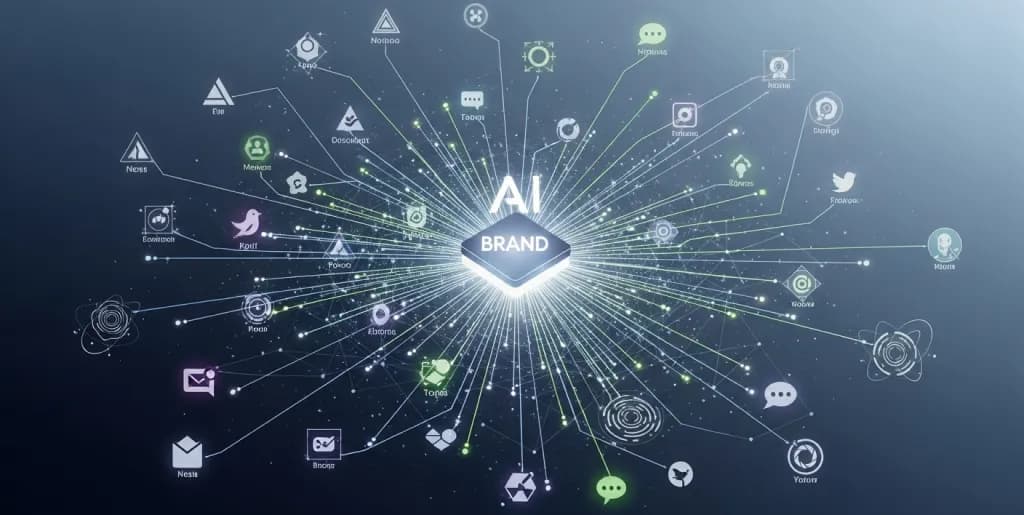
If you want better AI search visibility, focus less on generic "AI SEO hacks" and more on becoming a source worth citing. That usually means stronger entity signals, clearer expertise, public evidence, and brand mentions from places AI systems are likely to read and trust.
Backlinks still matter, but AI systems also evaluate unlinked mentions, factual density, and whether your brand repeatedly appears in the right context. The goal is not just to rank. The goal is to be selected, summarized, and cited.
This guide explains which AI SEO tips actually help with citations, where teams waste time, and how to build a digital footprint that is easier for search and LLM systems to trust.
The New Frontier of AI SEO Tips: Why Citations Matter More Than Ever
AI doesn't just crawl pages; it understands concepts, entities, and relationships. It builds a comprehensive knowledge graph of the world, and your brand needs to be a well-defined, highly-regarded node within it. This is where the true power of citations and mentions comes into play. They act as powerful signals of trust and authority, far beyond what a simple backlink ever could.
Think of AI as an incredibly intelligent researcher. It doesn't just look at who links to whom. It delves into who talks about whom, in what context, and how often. It assesses the reputation of the sources doing the talking. This nuanced understanding is why E-E-A-T (Experience, Expertise, Authoritativeness, Trustworthiness) has become the undisputed core of modern SEO. AI models are exceptionally good at identifying these signals, even in unstructured data.
From my own observations, I've seen how generative AI models synthesize answers by drawing from a multitude of sources, often going beyond the top-ranked organic results. For example, if a niche topic is discussed extensively and credibly on a reputable industry forum or in an expert podcast – even without a direct hyperlink to the original source – the AI can still connect those dots. It attributes expertise and context based on the mention itself, recognizing the brand or individual as a relevant entity. This phenomenon underscores the critical importance of cultivating a broad, high-quality digital footprint.
Deconstructing Citations and Mentions in the AI Era
Understanding what AI considers a "citation" or "mention" is crucial. It's far more expansive than the traditional SEO definition.
What AI Considers a "Citation"
In the context of AI search, a "citation" is any instance where your brand, product, service, or even key personnel are referenced by another entity on the web. This can be formal or informal.
- Formal Links vs. Unlinked Brand Mentions: While traditional backlinks remain valuable, AI places significant weight on unlinked brand mentions. If a reputable news site discusses your company's innovative product without linking to your website, AI still registers this as a strong signal of authority and relevance.
- Entity Recognition: AI's advanced natural language processing (NLP) capabilities allow it to identify and understand entities. It knows your brand name, your CEO's name, your flagship product. When these entities are mentioned, AI connects them to its internal knowledge graph, strengthening your brand's profile.
- Contextual Relevance: The context surrounding a mention is paramount. AI doesn't just count mentions; it analyzes why you're being mentioned. Is it in a positive light? Is it in relation to your core expertise? A mention on a highly relevant, authoritative site carries immense weight compared to a mention on a spammy, irrelevant platform.
The Power of Unlinked Mentions
This is where AI search truly changes the game. Historically, SEO focused heavily on securing hyperlinks because search engines needed them to crawl and understand connections. AI, however, is far more sophisticated. It can connect the dots without a hyperlink.
Imagine your brand being discussed on:
- Industry Forums and Communities: Experts referencing your whitepaper or methodology.
- Social Media: Influencers or thought leaders praising your product.
- Podcasts and Videos: Your CEO being interviewed, or your company's insights being discussed.
- News Articles and Blogs: Journalists or bloggers referencing your data or expertise, even without a direct link.
These unlinked mentions, especially when they come from high-quality, relevant sources, are incredibly powerful. They tell AI that your brand is a recognized, credible entity in its field, even if the source isn't explicitly passing "link equity." This semantic proximity – your brand name appearing near relevant keywords – is a potent signal for AI.
The Foundation: Become Cite-Worthy
Before you can earn mentions, you need to be worth mentioning. This isn't just about creating good content; it's about creating exceptional, unique, and authoritative content that others genuinely want to reference.
Publish Only Cite-Worthy Content on Your Blog
Your blog should be a hub of original thought, deep research, and unique insights. Don't just regurgitate what's already out there. Instead, focus on creating content that becomes a definitive resource.
- Original Research & Data: Conduct surveys, analyze proprietary data, or run experiments. When you publish findings that no one else has, you become the primary source. Other sites will cite you.
- In-depth Guides & Tutorials: Go beyond the basics. Create comprehensive, step-by-step guides that solve complex problems. These become invaluable resources for beginners and experts alike.
- Thought Leadership Pieces: Share your unique perspective on industry trends, future predictions, or controversial topics. Position yourself as an authority, sparking discussion and debate.
- Case Studies & Success Stories: Document your own successes or those of your clients in detail. Real-world results are highly shareable and demonstrate genuine expertise.
First-hand observation: We once published a detailed analysis of local search ranking factors post-BERT, based on an audit of 50 small businesses. This original research, complete with anonymized data points and actionable takeaways, was cited by over a dozen industry blogs and even a university marketing course. It wasn't just a blog post; it was a data-backed resource.
Create Unique Tools and Resources
Beyond written content, consider developing free tools, templates, or resources that solve a specific problem for your audience. These are inherently cite-worthy because they offer tangible value.
- Calculators: An ROI calculator for a specific marketing channel, a savings calculator for a new technology, or a project cost estimator.
- Templates: Content calendars, social media post templates, business plan outlines, or email marketing sequences.
- Checklists: SEO audit checklists, website launch checklists, or content promotion checklists.
- Free Mini-Courses or Ebooks: Package your expertise into a downloadable format that provides immense value.
These resources often get linked to and mentioned as "go-to" tools in their respective niches. They demonstrate practical expertise and a commitment to helping your audience.
Proactive Outreach: Earning Mentions Through Engagement
Waiting for mentions to happen organically is a slow game. You need to be proactive, reaching out and engaging with the broader digital ecosystem.
Publish Guest Posts About Your Brand on Other Websites
Guest posting isn't dead; it's evolved. Focus on high-authority, relevant sites where your target audience spends time. The goal isn't just a backlink, but a genuine mention of your brand, its unique approach, or your expertise.
- Target Relevant Publications: Seek out industry blogs, news sites, and online magazines that cover your niche.
- Offer Unique Value: Propose topics that align with the host site's audience but also allow you to naturally weave in your brand's insights or solutions.
- Focus on Thought Leadership: Position yourself as an expert, sharing valuable knowledge. A natural mention of your company as the source of this expertise is far more powerful than a forced promotional plug.
Step-by-step replication example:
- Identify 10-15 target blogs in your niche with strong domain authority.
- Analyze their content: What topics do they cover? What's missing?
- Brainstorm 3-5 unique article ideas that leverage your brand's expertise and offer fresh insights.
- Craft a compelling pitch email, highlighting your unique angle and how it benefits their readers.
- In your article, naturally integrate your brand name when discussing your methodology, a case study, or a specific tool you developed. For instance, "At [Your Brand Name], we've observed..."
Niche Edits in Already Ranking Articles
This strategy involves finding existing, high-ranking articles that are relevant to your niche and suggesting an edit to include a mention or citation of your content or brand. This is a powerful way to tap into established authority.
- Identify Opportunities: Use tools to find articles ranking for keywords you care about. Look for content that could be enhanced by referencing your unique data, tool, or expert perspective.
- Craft a Value-Driven Pitch: Don't just ask for a link. Explain why your content would improve their article. "I noticed your excellent piece on [Topic]. We recently published [Your Content] which offers [Unique Data/Perspective] that could add even more depth to your section on [Specific Subtopic]."
- Be Patient and Persistent: This often requires follow-ups. Focus on building a relationship, not just getting a link.
Strategic Digital PR and Outreach
Digital PR in the AI age is less about link building and more about reputation building.
- Identify Relevant Publications, Journalists, and Influencers: Research who is already covering topics related to your expertise. Look for those with a strong E-E-A-T profile themselves.
- Craft Compelling Pitches: Don't just ask for a link or a mention. Offer genuine value. Share your unique research, provide an expert quote on a breaking news story, or offer to contribute a guest piece that solves a real problem for their audience.
- Focus on Earning Mentions: Shift your mindset from "getting a link" to "becoming a valuable resource." When you provide genuine value, mentions (and often links) will follow naturally.
- Guest Contributions, Expert Quotes, Interviews: Actively seek opportunities to share your expertise on other platforms. This positions you as a thought leader and generates valuable brand mentions.
First-hand case: A client, a SaaS company, launched a new feature. Instead of just a blog post, they crafted a press release highlighting the problem the feature solved and offered an exclusive interview to a leading tech journalist. The resulting article in a major tech publication led to dozens of organic mentions across smaller tech blogs and forums, significantly boosting their brand's authority.
Nurturing Your Brand's Online Presence
Consistency and active engagement are key to building a robust online identity that AI can easily recognize and trust.
- Consistent Brand Messaging Across All Platforms: Ensure your brand's voice, values, and core messaging are uniform everywhere you have a presence. This helps AI build a coherent understanding of your entity.
- Active Participation in Industry Communities: Engage meaningfully in forums, LinkedIn groups, Reddit communities, and other online spaces where your target audience and industry peers gather. Share insights, answer questions, and establish yourself as a helpful expert.
- Monitoring Brand Mentions and Engaging Thoughtfully: Use tools to track where your brand is being mentioned. Respond to positive mentions with gratitude and address negative feedback professionally and constructively. This demonstrates responsiveness and trustworthiness.
- Building a Strong Personal Brand for Key Team Members: Encourage your experts, founders, and leaders to develop their own online presence. When individuals associated with your brand are recognized as authorities, it reflects positively on your entire organization.
Leveraging Structured Data and Knowledge Graphs
Structured data provides explicit signals to AI about your entity, making it easier for models to understand who you are and what you do.
- Schema Markup for Entities: Implement Schema.org markup for your Organization, Person, Product, Service, and other relevant entities. This tells search engines, including AI models, exactly what each piece of information represents.
- Ensuring Consistent NAP (Name, Address, Phone) Information: For local businesses, consistent NAP across your website, Google Business Profile, and other directories is non-negotiable. Inconsistencies confuse AI and erode trust.
- Claiming and Optimizing Key Profiles: Actively manage your Google Business Profile, Wikipedia entries (if applicable), Crunchbase, LinkedIn company pages, and other authoritative industry directories. These profiles feed directly into AI's knowledge graphs.
- How These Signals Feed into AI's Understanding: By providing clear, structured data, you're essentially giving AI a cheat sheet about your brand. This helps it confidently identify, categorize, and recommend your entity in search results.
Leverage Social Media Platforms for Organic Mentions
Social media isn't just for engagement; it's a powerful engine for earning mentions, especially on platforms like Reddit and LinkedIn, which AI models increasingly crawl for real-world opinions and discussions.
Reddit: The Untapped Goldmine
Reddit is a treasure trove for authentic discussions. AI models are getting better at understanding the sentiment and factual claims within these communities.
- Start Your Own Threads (Carefully): Create a relevant, non-promotional thread in a niche subreddit. Pose a genuine question or share an interesting observation related to your space.
- Edit Later (Subtly): Once the thread gains traction, you can subtly edit your original post to include a natural mention of your brand if it genuinely adds value to the discussion. For example, "After testing various solutions, we found that [Your Brand Name]'s approach to X was particularly effective because..."
- Comment with Another Account (Ethically): If you have a separate, established account, you can comment on your own thread (or others') with a natural mention. Disclaimer: Always prioritize transparency and genuine contribution. Deceptive practices can lead to bans.
- Post Reddit Comments to Answer Questions: This is perhaps the most effective and ethical approach. Actively monitor subreddits related to your industry. When users ask questions that your brand or expertise can answer, provide a helpful, detailed response. Naturally drop your brand name (just the name, not a URL) where it makes sense as context or a solution. For example, "Many people struggle with this. At [Your Brand Name], we've seen great results by focusing on..."
LinkedIn: Professional Networking for Citations
LinkedIn is an undisputed hub for professional content and thought leadership.
- Write LinkedIn Articles: Publish in-depth articles on your LinkedIn profile or company page. These can be repurposed blog content or unique pieces. When others share or reference your articles, it creates valuable mentions.
- Engage with Influencers: Comment thoughtfully on posts by industry leaders. Share your insights. If your comments are insightful, you might get noticed and eventually mentioned by the influencer or their followers.
- Ask Other Influencers to Write Posts About Your Product: Build relationships with relevant LinkedIn influencers. If they genuinely find value in your product or service, they might be open to creating content (posts, articles, videos) that naturally mentions your brand. This is a powerful endorsement.
YouTube: Visual Mentions and Reviews
Video content is increasingly important for AI search, especially as AI models improve their ability to transcribe and understand visual context.
- Publish YouTube Videos (You Can Use AI): Create high-quality video content related to your niche. This could be tutorials, product demos, industry analyses, or interviews. AI tools can assist with scriptwriting, video editing, and even generating voiceovers.
- Reach Out to Small YouTube Creators: Identify micro-influencers or niche creators whose audience aligns with yours. Offer them your product or service for free in exchange for an honest review or mention. Small creators often have highly engaged audiences and are more accessible than mega-influencers.
- Collaborate on Video Content: Partner with other creators to produce joint videos. This exposes your brand to new audiences and generates cross-platform mentions.
Directory Submissions and Structured Data
While often seen as a foundational SEO task ensuring your brand is accurately listed across various directories is crucial for AI entity recognition.
Submit Your Product to Every Directory You Can Find (Minimum 100)
This isn't just about local citations. It's about establishing your brand as a verifiable entity across the web. Think beyond the obvious.
- Industry-Specific Directories: Look for lists of companies or products within your niche.
- Software Review Sites: G2, Capterra, Software Advice, TrustRadius, etc.
- Local Business Directories: Google Business Profile, Yelp, Yellow Pages (if applicable).
- General Business Directories: Crunchbase, Bloomberg, etc.
- Professional Associations: If your business or expertise aligns with a professional body, ensure you're listed.
Consistency is key here. Ensure your Name, Address, Phone (NAP) details are identical across all listings. AI models use these consistent data points to build a robust understanding of your entity.
Optimize for Google's Knowledge Panel and Entity Recognition
Google's Knowledge Panel is the ultimate AI citation. It's a direct representation of Google's understanding of your entity.
- Consistent NAP & Brand Information: As mentioned, ensure your business name, address, phone number, and website are consistent everywhere.
- Schema Markup: Implement structured data (Schema.org) on your website. Use
OrganizationorLocalBusinessschema to explicitly tell search engines about your entity. - Wikipedia & Wikidata: If your brand is notable enough, a Wikipedia page or a Wikidata entry is an incredibly powerful signal for entity recognition. These are highly trusted sources for AI models.
- Crunchbase Profile: A well-maintained Crunchbase profile can also contribute to your Knowledge Panel presence.
The Role of E-E-A-T in AI-Driven Citation Earning
E-E-A-T is not just a buzzword; it's the bedrock of AI search. Every citation and mention you earn is evaluated through this lens.
Demonstrating Experience and Expertise
AI wants to know that you're not just talking the talk, but walking the walk.
- Showcasing Credentials, Awards, and Real-World Results: Clearly display any relevant certifications, industry awards, or accolades. Share case studies and testimonials that highlight tangible results you've achieved for clients or users.
- Author Bios and "About Us" Pages: Ensure your author bios are detailed, outlining their qualifications, experience, and any relevant professional affiliations. Your "About Us" page should clearly articulate your company's history, mission, and the expertise of your team.
- Practical Tutorials and Step-by-Step Guides: For educational content (like this article!), demonstrating practical experience through actionable tutorials and replicable steps is crucial. This shows you understand the subject deeply and can guide others effectively.
Cultivating Authoritativeness
Authoritativeness is about being recognized as a leading voice in your field.
- Being Cited by Other Authoritative Sources: When other respected publications, academic institutions, or industry leaders reference your work, it's a powerful signal of your authority. This is the ultimate goal of citation building.
- Strong Backlink Profile (Still Relevant): While not the only factor, a strong backlink profile from high-authority, relevant domains still contributes to your overall authoritativeness. It shows that other established entities trust and value your content.
- Original Research and Proprietary Data: Publishing unique research or data that others can't find elsewhere establishes you as a primary source, a true authority in your niche.
Building Trustworthiness
Trustworthiness is the foundation upon which all other E-E-A-T signals rest. Without it, even expertise can be dismissed.
- Transparency, Accuracy, and Clear Disclaimers: Be upfront about your sources, methodologies, and any potential biases. Ensure all information is accurate and up-to-date. If you're providing advice, especially in YMYL (Your Money Your Life) areas, include clear disclaimers that your content is for informational purposes only and not a substitute for professional advice. (Though this article is not YMYL, the principle applies to all credible content.)
- Positive Reviews and Testimonials: Actively solicit and display positive reviews and testimonials on your website and third-party platforms. These are direct signals of user satisfaction and trust.
- Secure Website (HTTPS) and Clear Privacy Policy: A secure website (HTTPS) is a fundamental trust signal. A clear, easily accessible privacy policy demonstrates your commitment to user data protection.
- Addressing Negative Feedback Professionally: How you handle criticism or negative reviews speaks volumes about your trustworthiness. Respond respectfully, offer solutions, and demonstrate a commitment to customer satisfaction.
Monitoring and Amplification: Don't Let Mentions Go Unnoticed
Earning mentions is only half the battle. You need to know when they happen and how to amplify their impact.
Measuring and Monitoring Your Citation Strategy
Utilize tools like Google Alerts (free), Brandwatch, or Mention to track where and when your brand, products, or key personnel are mentioned across the web.
- Identify New Citation Opportunities: Discover sites that are already talking about you and might be open to a more formal citation or collaboration.
- Engage with the Mentions: Thank the person or publication. Share the content. This strengthens relationships and signals to AI that the mention is valued.
- Correct Inaccuracies: If your brand is mentioned incorrectly, you can reach out to the source to correct it, ensuring consistent data for AI models.
- Analyzing the Quality and Context of Mentions: Don't just count mentions. Evaluate the authority of the referring source, the sentiment (positive, negative, neutral), and the surrounding context. Is the mention relevant to your core business?
- Correlation with Organic Visibility and AI Search Results: Look for patterns. Do increases in high-quality mentions correlate with improved rankings for relevant keywords or increased visibility in AI-generated summaries? This requires careful observation and analysis over time.
- Setting Realistic KPIs Beyond Just Link Counts: Your Key Performance Indicators (KPIs) should evolve beyond just the number of backlinks. Consider metrics like:
- Number of high-authority unlinked brand mentions.
- Sentiment analysis of mentions.
- Share of voice in industry conversations.
- Increased direct traffic or brand searches.
- Inclusion in AI-generated summaries for target queries.
Amplify Positive Mentions
When you get a great mention or citation, don't keep it to yourself!
- Share on Social Media: Post about it on all your social channels. Tag the source.
- Feature on Your Website: Create a "Press" or "Mentions" section on your website to showcase these endorsements.
- Include in Newsletters: Share highlights of recent mentions with your email subscribers.
Amplifying mentions not only spreads the word but also creates a feedback loop, encouraging more mentions in the future. It demonstrates that your brand is active and engaged with the content being created about it.
Common Pitfalls and What Doesn't Work in AI Search
While the opportunities are vast, there are also brutal realities and strategies that simply won't cut it in the AI-driven search landscape.
The Brutal Reality of Low-Quality Mentions
AI is incredibly discerning. It's not about volume; it's about quality.
- Spammy Directories and Irrelevant Sites: Mentions from low-quality, spammy websites or irrelevant directories will do more harm than good. AI can easily identify and discount these.
- Mentions Without Context or From Untrustworthy Sources: A mention from a site with no authority or one that doesn't understand your niche won't move the needle. Worse, if the source itself is deemed untrustworthy, it can negatively impact your brand's perception by AI.
- AI is Sophisticated Enough to Filter Out Noise: Generative AI models are trained on vast datasets and are excellent at pattern recognition. They can differentiate between genuine authority signals and manipulative tactics. Attempting to game the system with low-quality, artificial mentions is a losing battle.
Over-optimization and Keyword Stuffing
The days of stuffing keywords into every available space are long gone. AI prioritizes natural language and user intent.
- AI Prioritizes Natural Language and Intent: Content that reads unnaturally or is clearly written for algorithms rather than humans will be penalized. AI understands the nuances of human language and can detect manipulative patterns.
- Focus on Value, Not Manipulation: Your primary goal should be to provide genuine value to your audience. When you do that, your content will naturally contain relevant keywords and concepts that AI can understand.
Neglecting Your Brand's Reputation
In an era where AI synthesizes information, a negative reputation can spread like wildfire.
- Negative Mentions Can Be Amplified: If your brand is consistently mentioned negatively, or if there are unresolved customer complaints, AI can pick up on this sentiment. This can lead to your brand being excluded from recommendations or even flagged as untrustworthy.
- Proactive Reputation Management is Key: Actively monitor your brand's online reputation. Address negative feedback promptly and professionally. Strive to resolve issues and turn negative experiences into positive ones. Your digital reputation is more critical than ever.
The durable version of AI SEO is simple to describe and hard to fake: build content worth referencing, keep it crawlable, and earn mentions from sources that already have trust. That gives LLM systems more reasons to surface your brand when they synthesize answers.
If your brand is invisible in AI search today, the fix is rarely "publish more." It is usually "publish clearer, prove more, and get mentioned in better places."
Quick takeaways
- AI citation visibility depends on trust, coverage, and extractable facts, not just backlinks.
- Unlinked brand mentions on credible sites can still strengthen entity recognition.
- Citation-worthy content usually includes original data, clear authorship, and source-backed claims.
- Reputation and crawl access matter as much as content production.
References
- Google Search Central: Creating helpful, reliable, people-first content
- OpenAI Help Center: Publishers and Developers - FAQ
- Anthropic Help Center: Does Anthropic crawl data from the web, and how can site owners block the crawler?